YEAR
2023
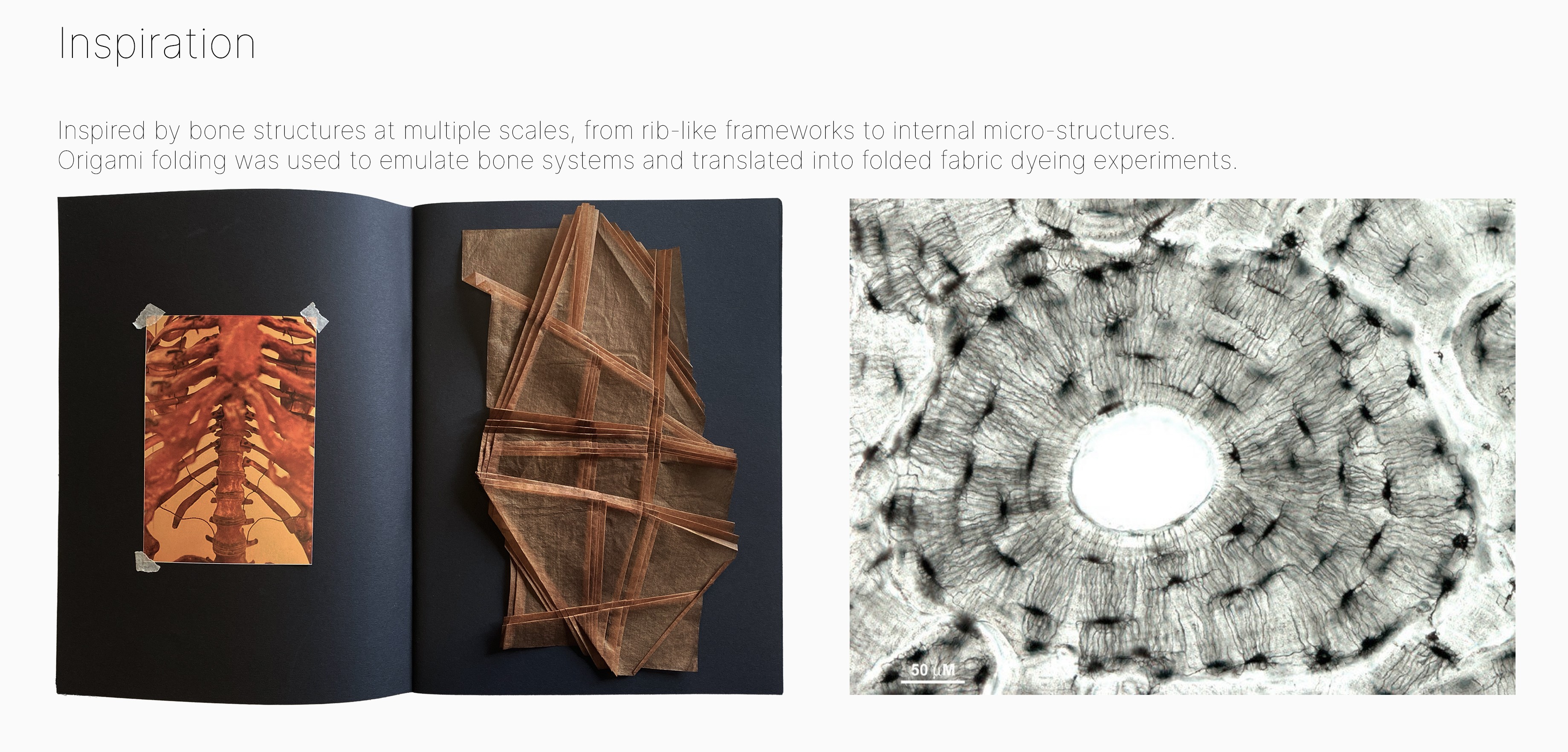
Bone Project studies order in natural structures. Both the large form of bones and the microscopic organisation of bone fibres reveal layered and repetitive systems that balance strength and lightness.
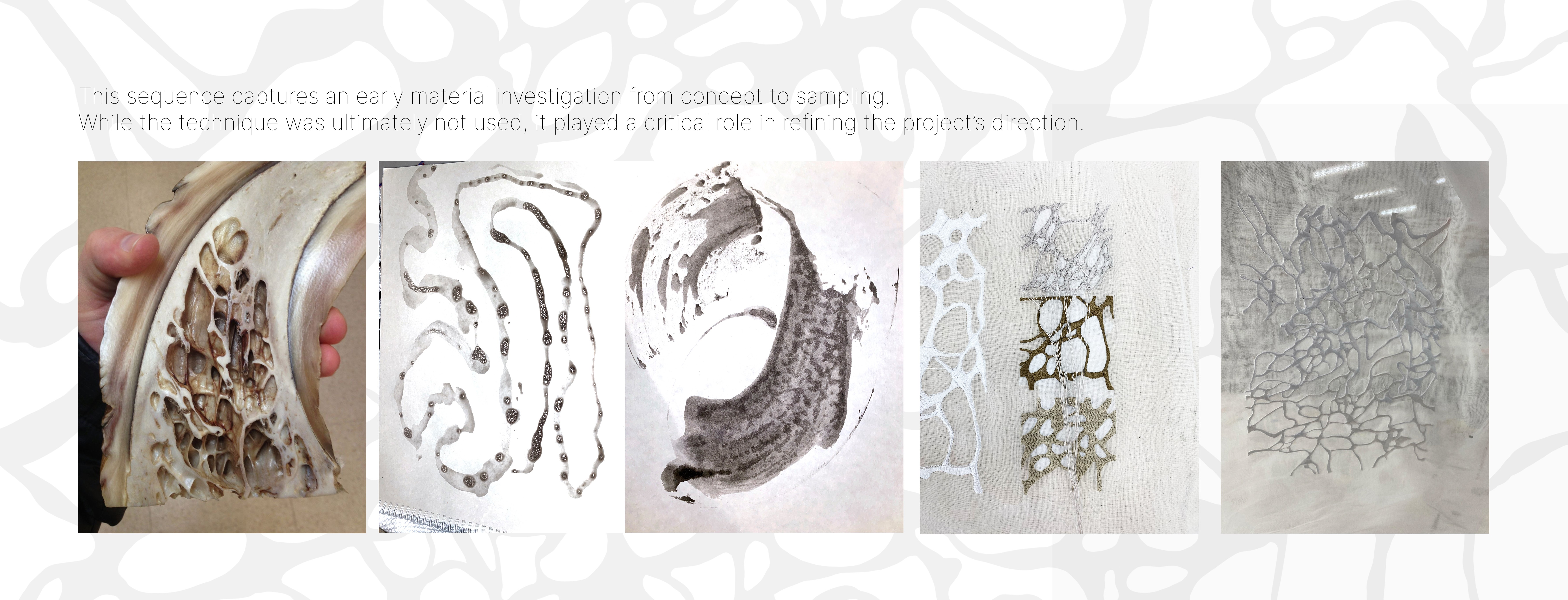
This observation was connected to folding processes such as shibori and origami, where repeated folds generate structure and pattern simultaneously. The project explores how controlled actions can produce complex results, searching for relationships between biological organisation and textile formation.
Rather than copying bone visually, the work investigates how structure emerges through sequence, pressure and repetition.
About the project
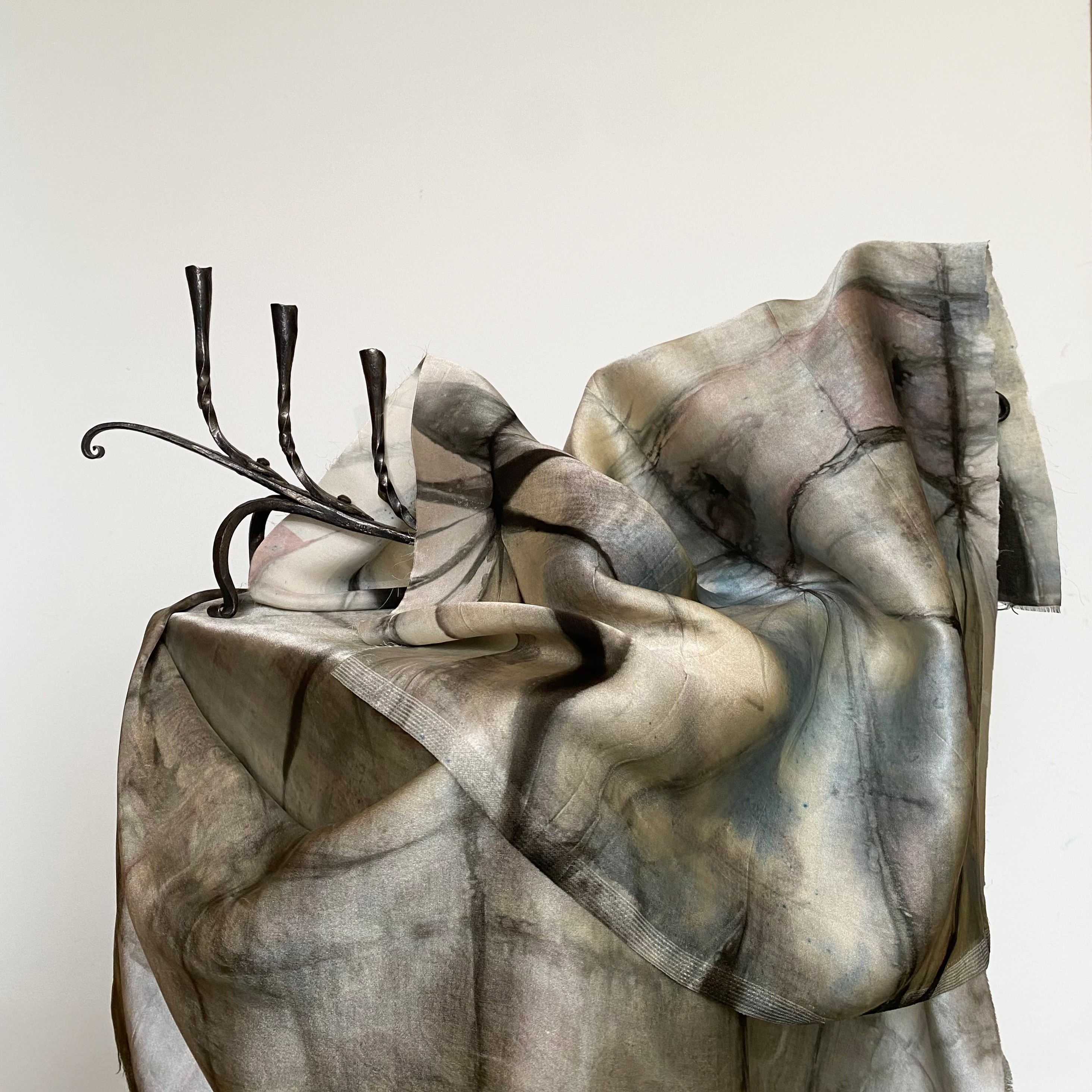
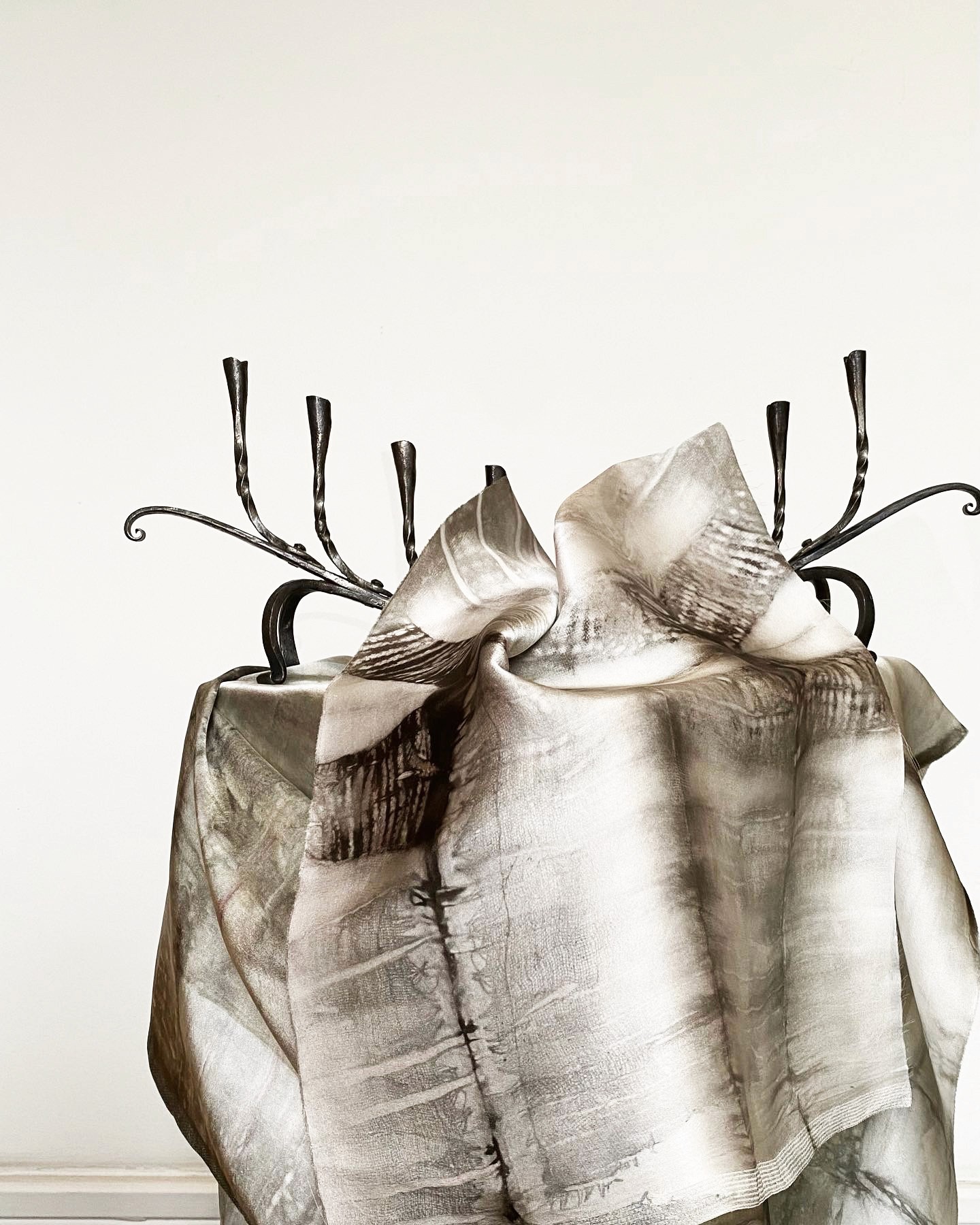
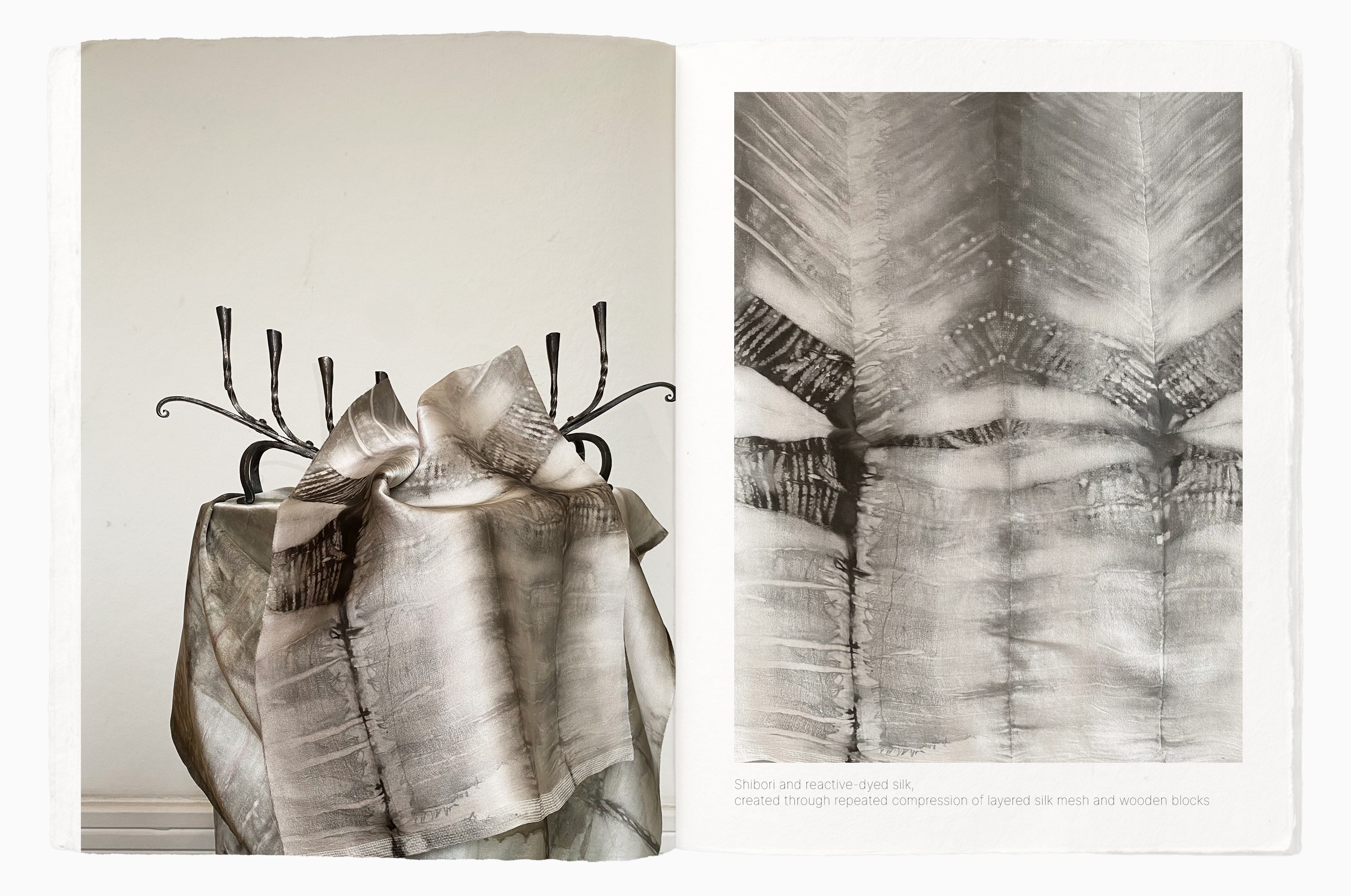
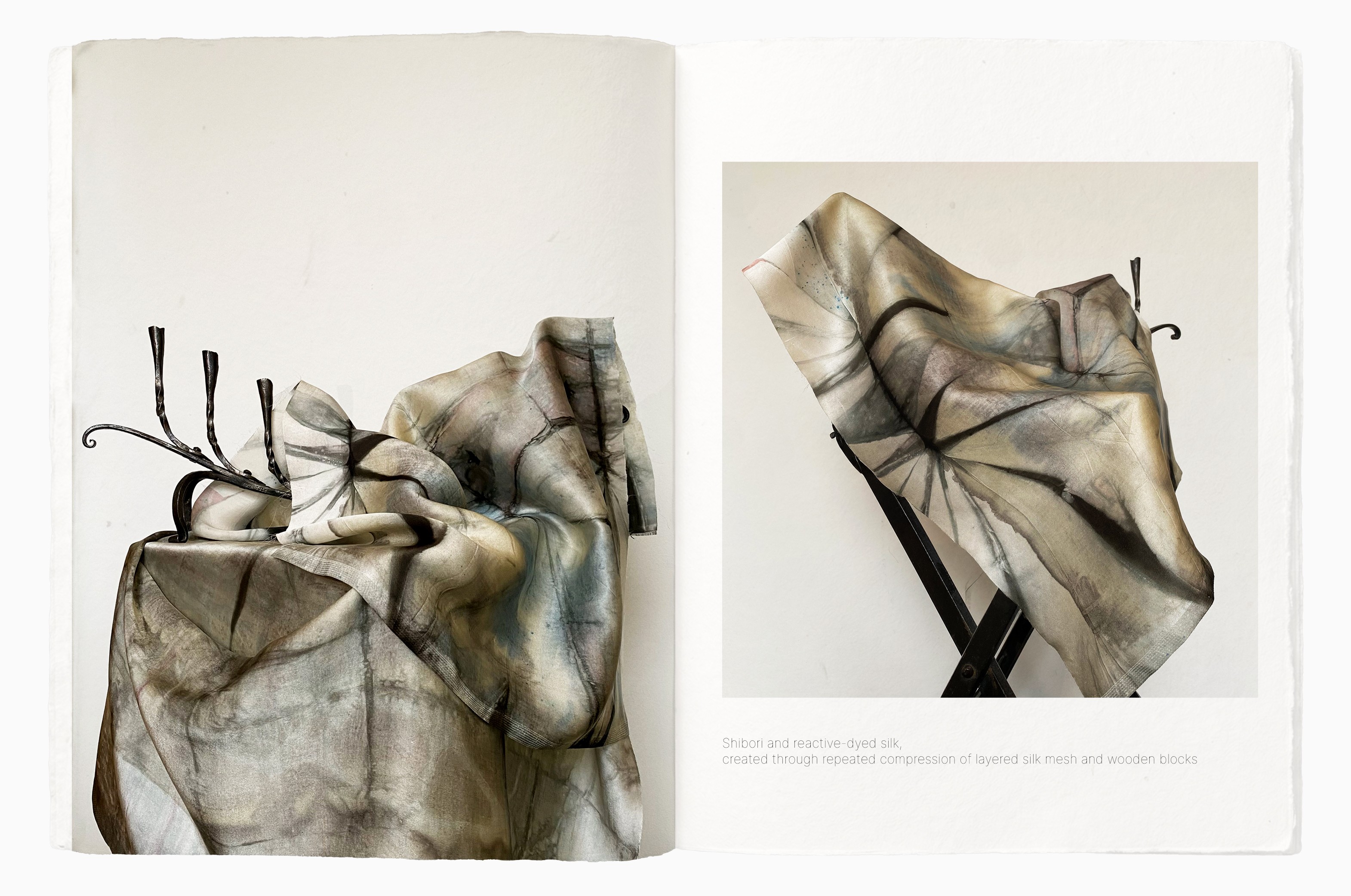
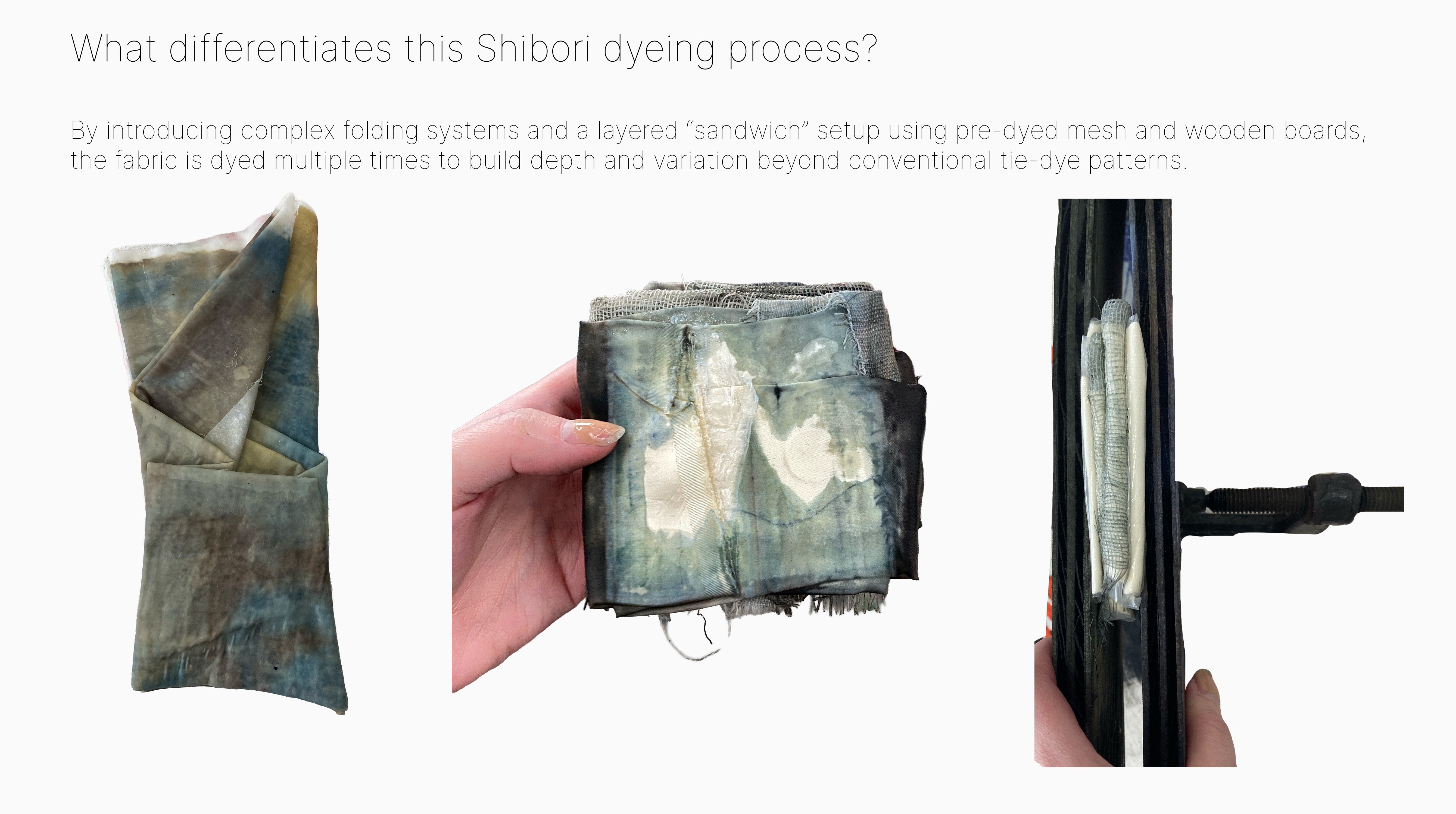
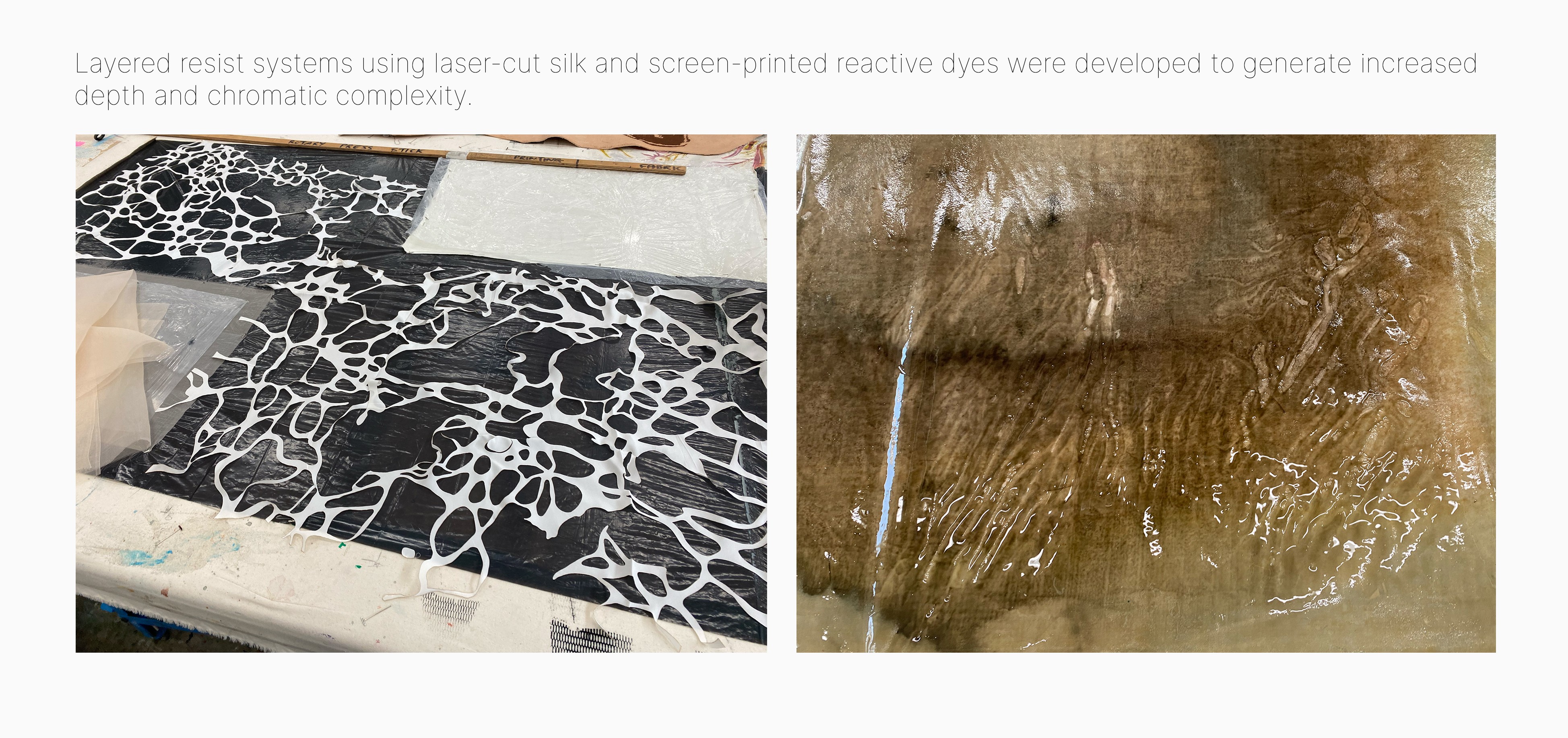
Traditional shibori dyeing was used as a starting point, then modified by introducing additional materials during the binding and pressing stages. Wood boards, absorbent materials carrying coloured pastes, and water-soluble PVA elements were inserted into the folds before dyeing.
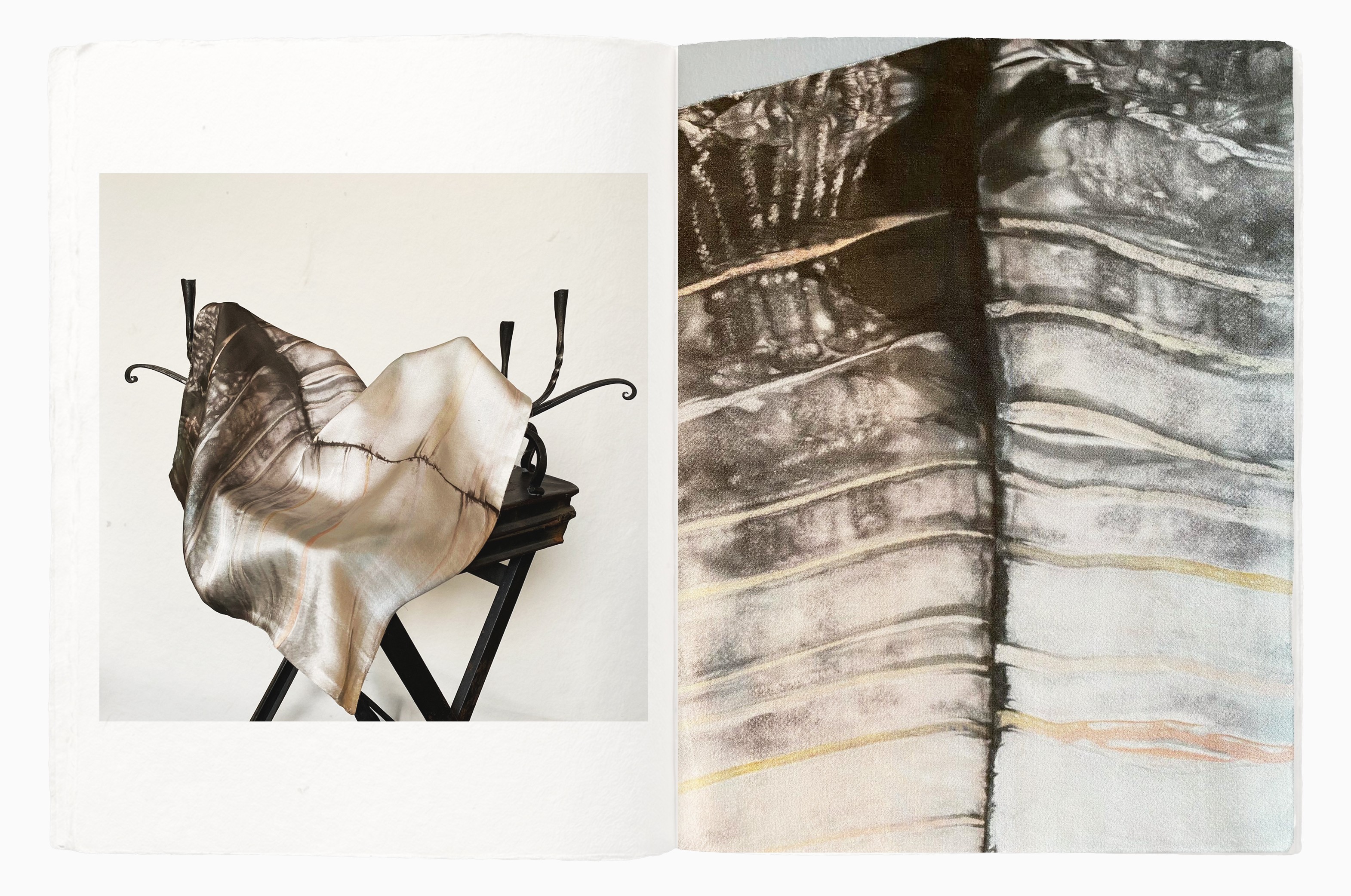
When immersed in a single dye bath, each material interacted differently with pressure, moisture and pigment. Some areas resisted colour, others absorbed or transferred it, producing layered and unpredictable variations within one process.
Through these interventions, the project expands a traditional technique into a system of controlled variables. The outcome is not a fixed pattern but a range of complex structures generated by the relationship between folding, compression and material behaviour.
Smooth Scroll
This will hide itself!
This will hide itself!
Bone project
From bone to fold.
YEAR
2023
Bone Project studies order in natural structures. Both the large form of bones and the microscopic organisation of bone fibres reveal layered and repetitive systems that balance strength and lightness.
This observation was connected to folding processes such as shibori and origami, where repeated folds generate structure and pattern simultaneously. The project explores how controlled actions can produce complex results, searching for relationships between biological organisation and textile formation.
Rather than copying bone visually, the work investigates how structure emerges through sequence, pressure and repetition.
About the project
Traditional shibori dyeing was used as a starting point, then modified by introducing additional materials during the binding and pressing stages. Wood boards, absorbent materials carrying coloured pastes, and water-soluble PVA elements were inserted into the folds before dyeing.
When immersed in a single dye bath, each material interacted differently with pressure, moisture and pigment. Some areas resisted colour, others absorbed or transferred it, producing layered and unpredictable variations within one process.
Through these interventions, the project expands a traditional technique into a system of controlled variables. The outcome is not a fixed pattern but a range of complex structures generated by the relationship between folding, compression and material behaviour.
Smooth Scroll
This will hide itself!
This will hide itself!
Bone project
From bone to fold.
YEAR
2023
Bone Project studies order in natural structures. Both the large form of bones and the microscopic organisation of bone fibres reveal layered and repetitive systems that balance strength and lightness.
This observation was connected to folding processes such as shibori and origami, where repeated folds generate structure and pattern simultaneously. The project explores how controlled actions can produce complex results, searching for relationships between biological organisation and textile formation.
Rather than copying bone visually, the work investigates how structure emerges through sequence, pressure and repetition.
About the project
Traditional shibori dyeing was used as a starting point, then modified by introducing additional materials during the binding and pressing stages. Wood boards, absorbent materials carrying coloured pastes, and water-soluble PVA elements were inserted into the folds before dyeing.
When immersed in a single dye bath, each material interacted differently with pressure, moisture and pigment. Some areas resisted colour, others absorbed or transferred it, producing layered and unpredictable variations within one process.
Through these interventions, the project expands a traditional technique into a system of controlled variables. The outcome is not a fixed pattern but a range of complex structures generated by the relationship between folding, compression and material behaviour.
Smooth Scroll
This will hide itself!
This will hide itself!