YEAR
2025
Shadowplay considers shadow as a metaphor for internal states — emotions and uncertainties that remain present yet difficult to confront. When light enters, shadow does not disappear; it shifts, breaks apart and becomes visible. The project begins from this moment of exposure, where illumination turns something hidden into something perceived.
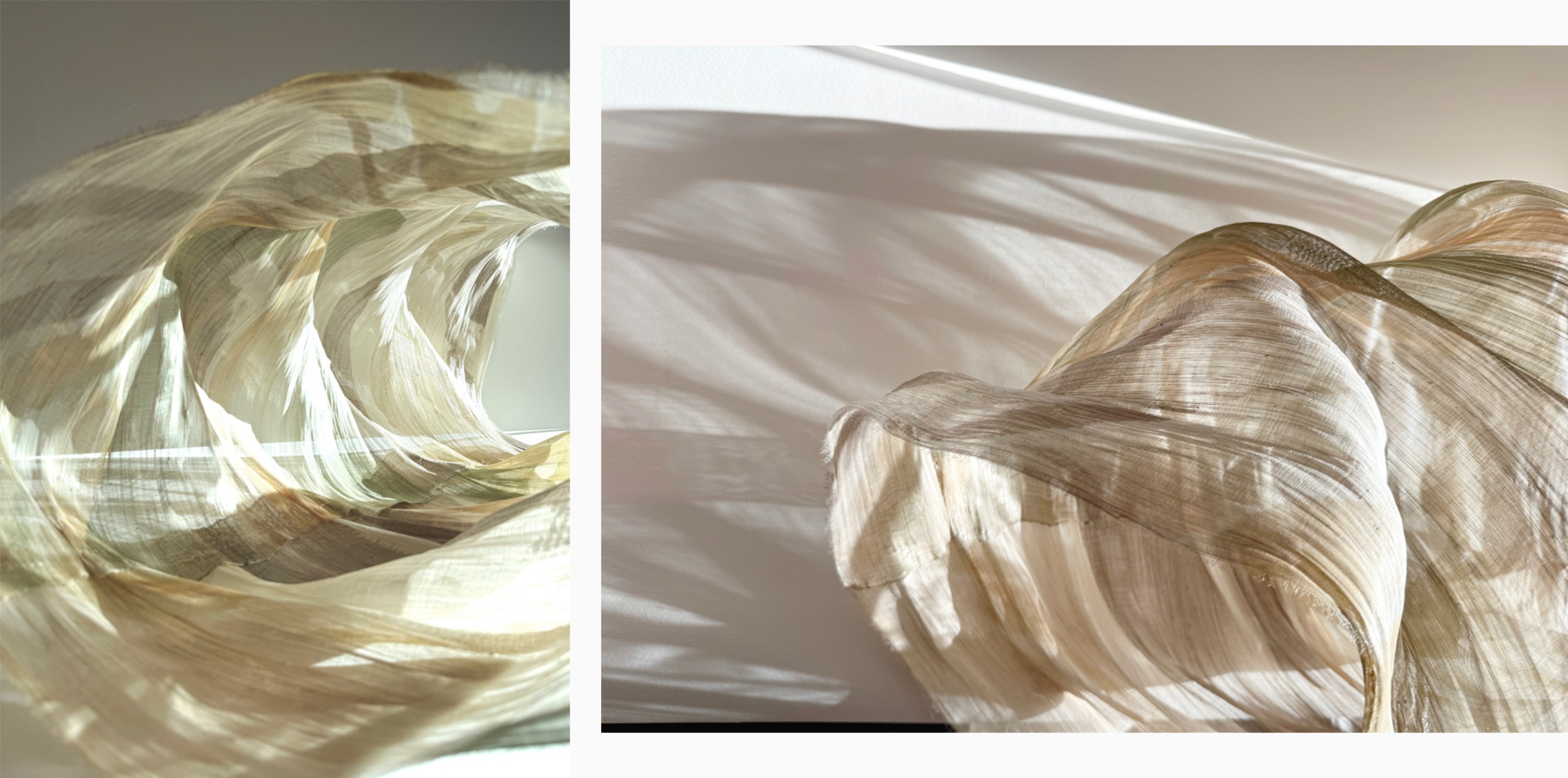
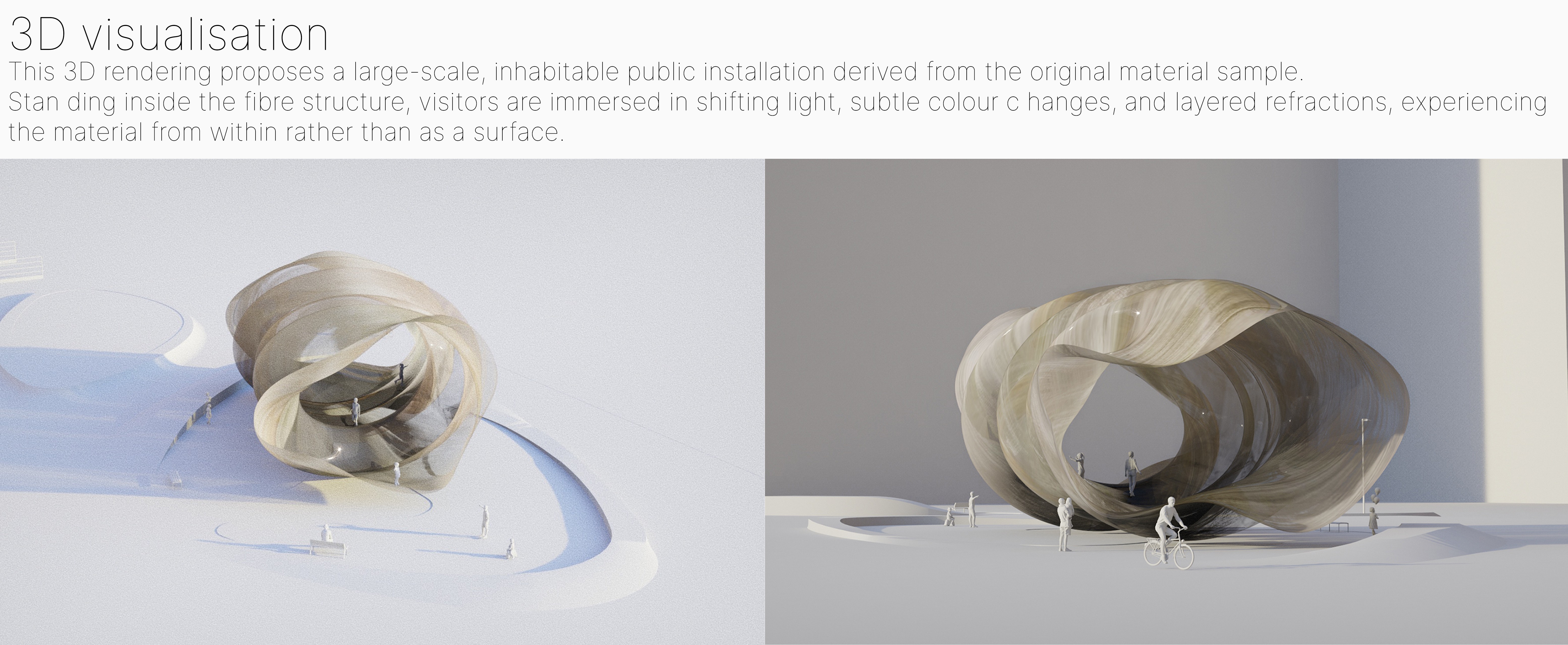
The Light chapter focuses on how light passes through textile material and enters a space. A translucent surface does not block light but filters it, softening contrast and dissolving clear boundaries. Instead of producing an image, the textile alters spatial perception, allowing light to occupy the room as a gradual presence.
Through this mediation, material affects atmosphere. The filtered light changes how distance and proximity are sensed, creating a subtle emotional response between body and environment. The surface becomes less an object and more a condition within the space.
About the project
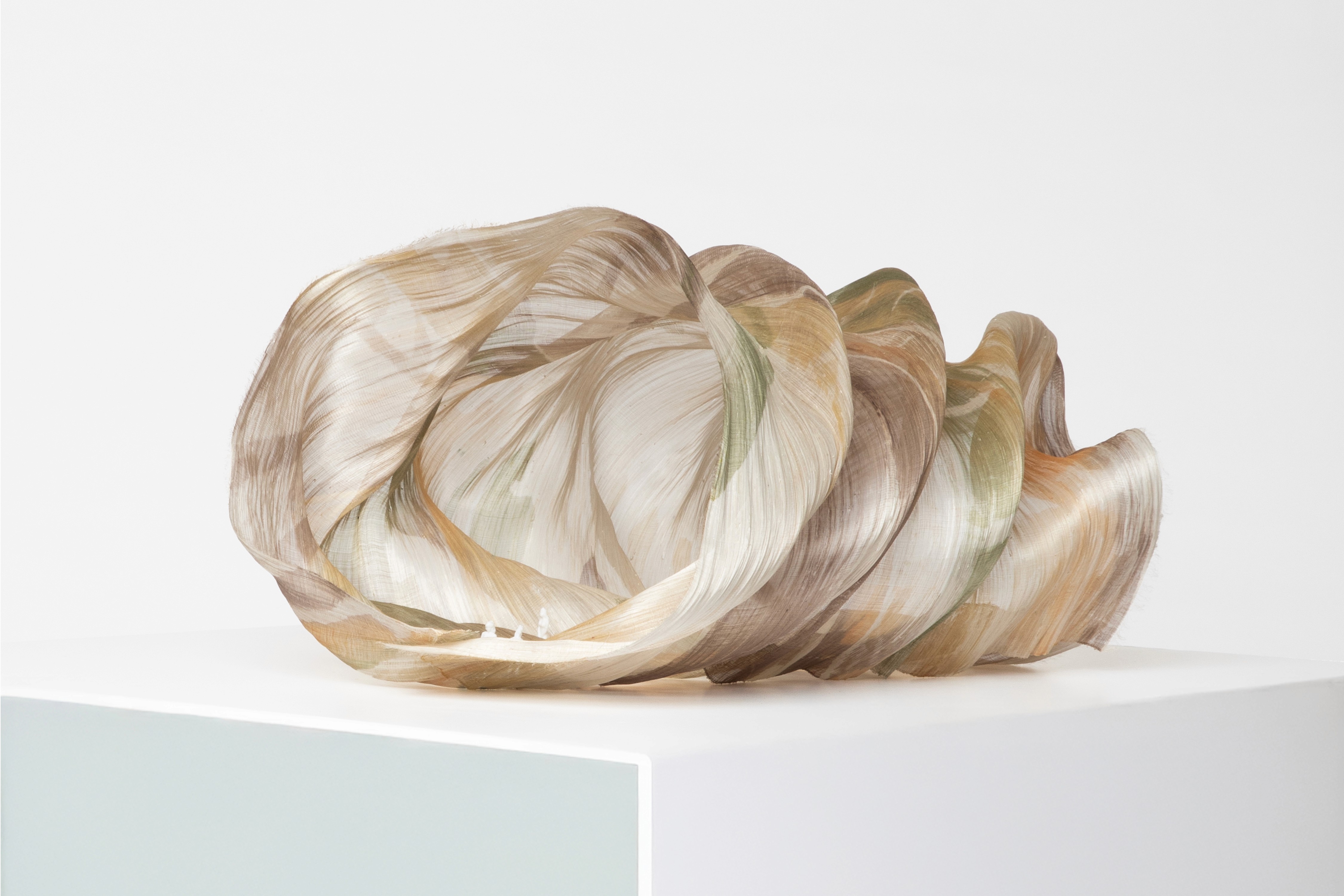
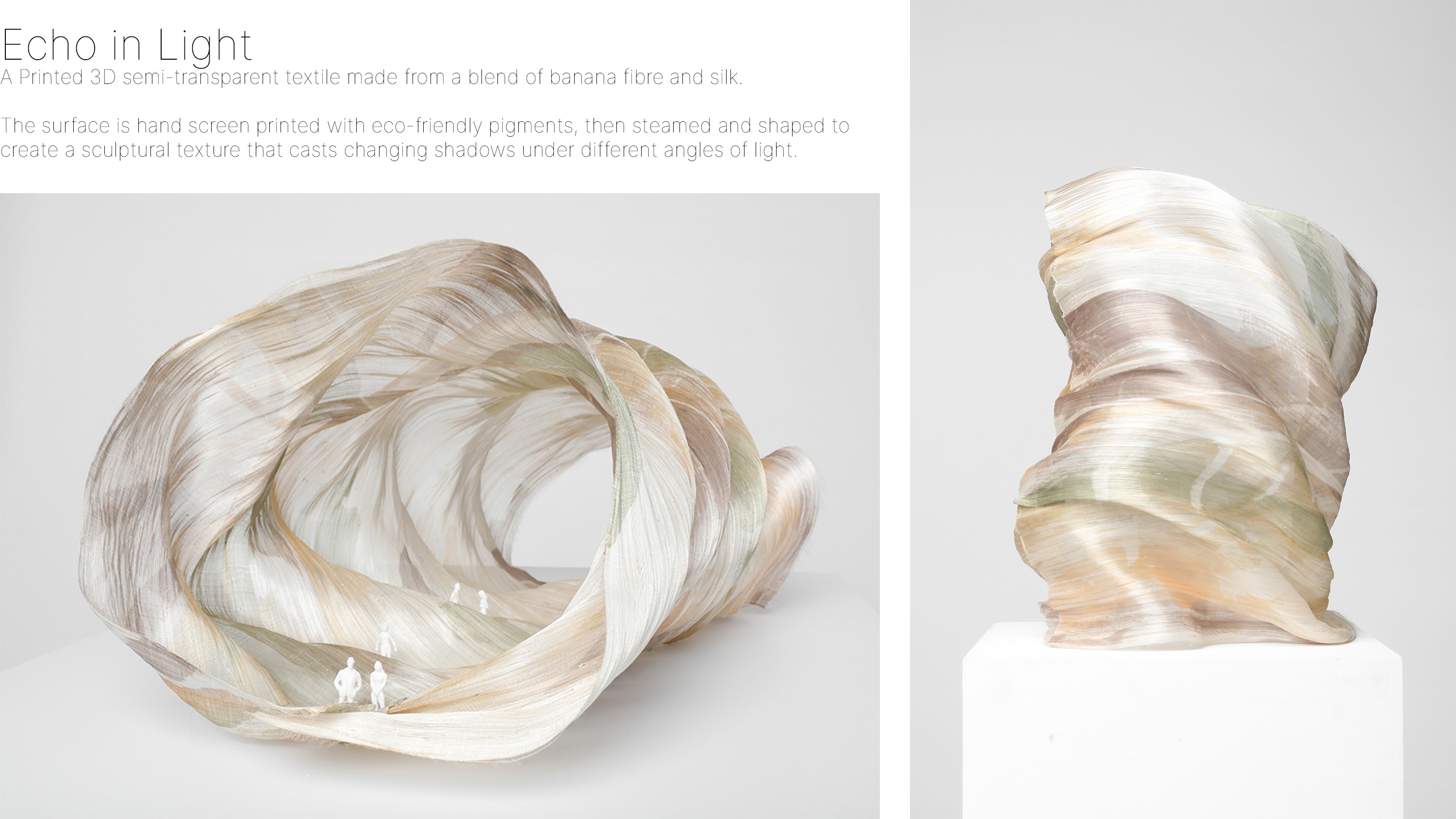
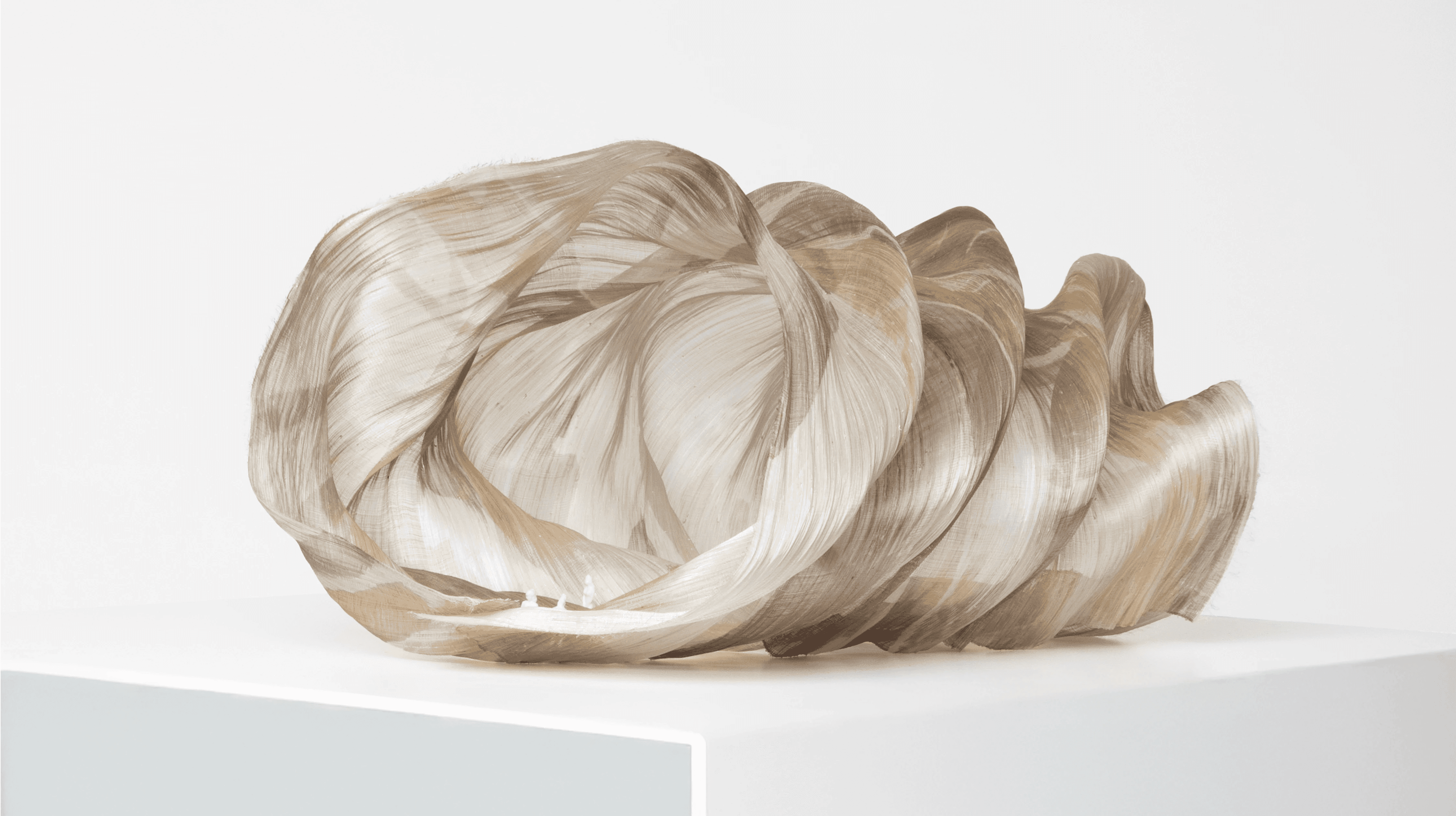
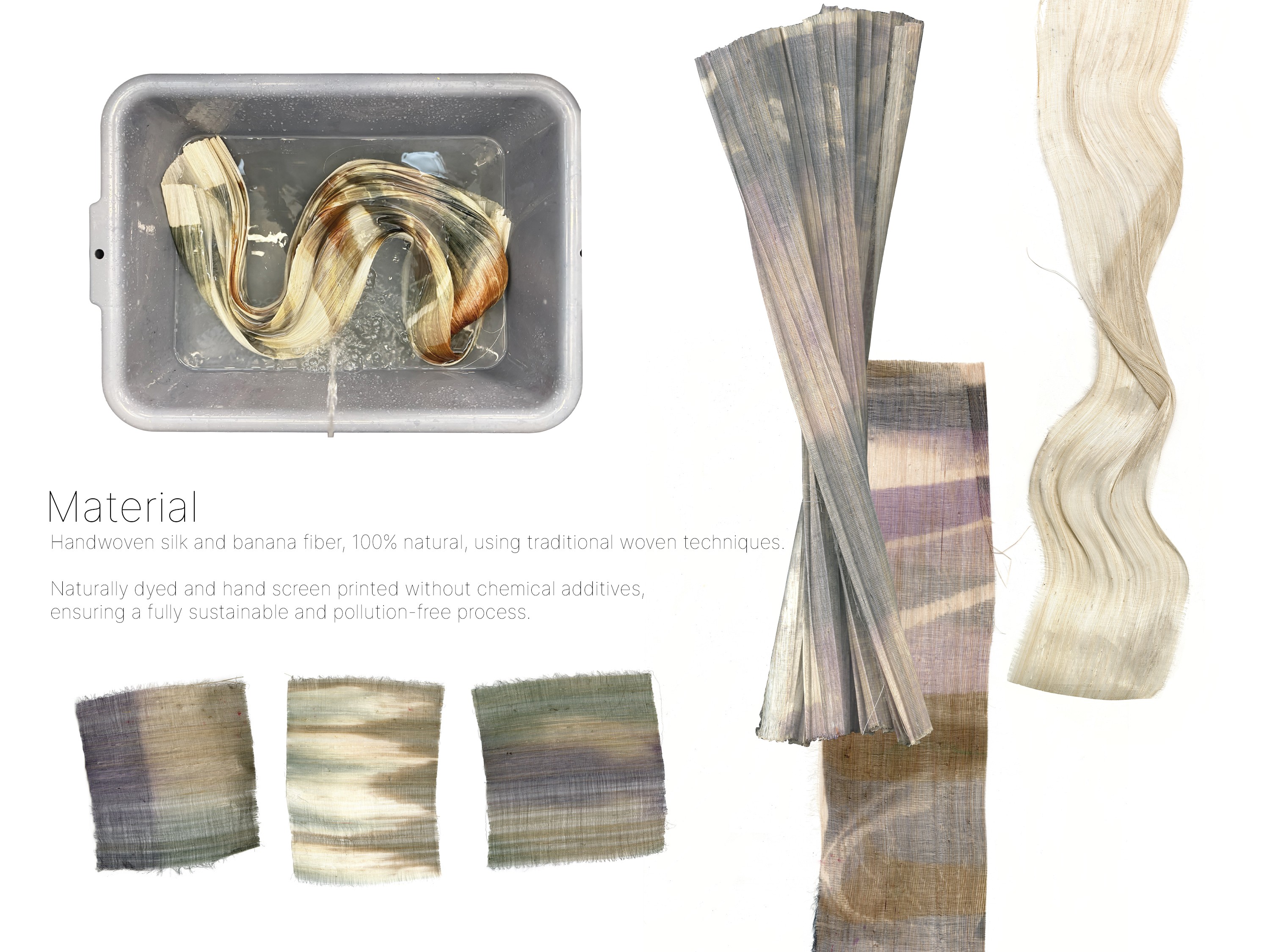
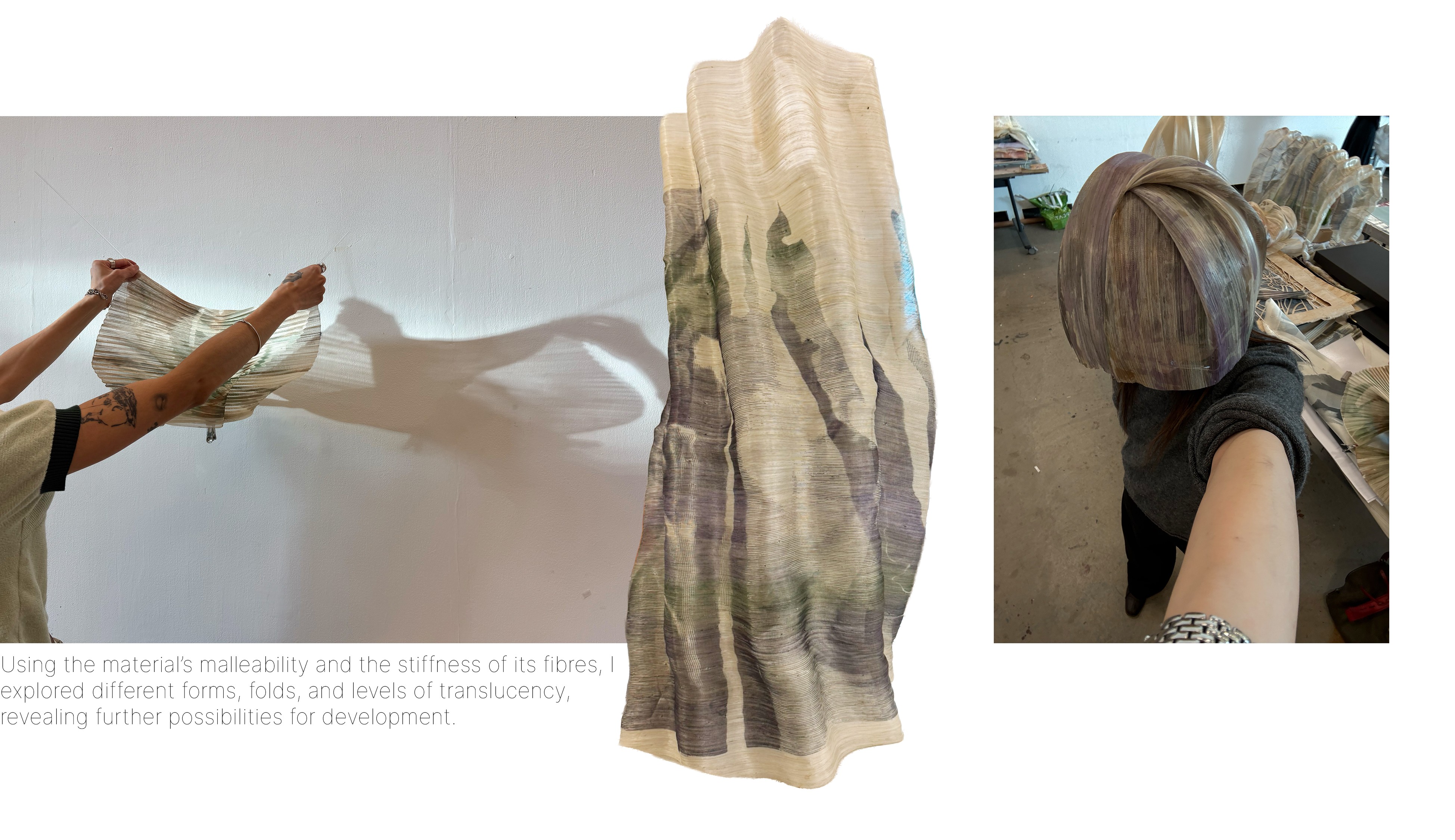
The textiles are constructed from banana fibre sourced from Southeast Asia, handwoven with silk yarns. Light transmission is largely governed by the textile structure: the finer silk yarns create more open passages for light, while the coarser banana fibres provide structural support and dimensional stability. Variations in warp and weft density create areas of differing transparency and strength, allowing the textile to hold form while remaining lightweight. Responsive to moisture, heat and tension, the fibres can be gently shaped and set, allowing the surface to move from a soft cloth into a formed, spatial layer.
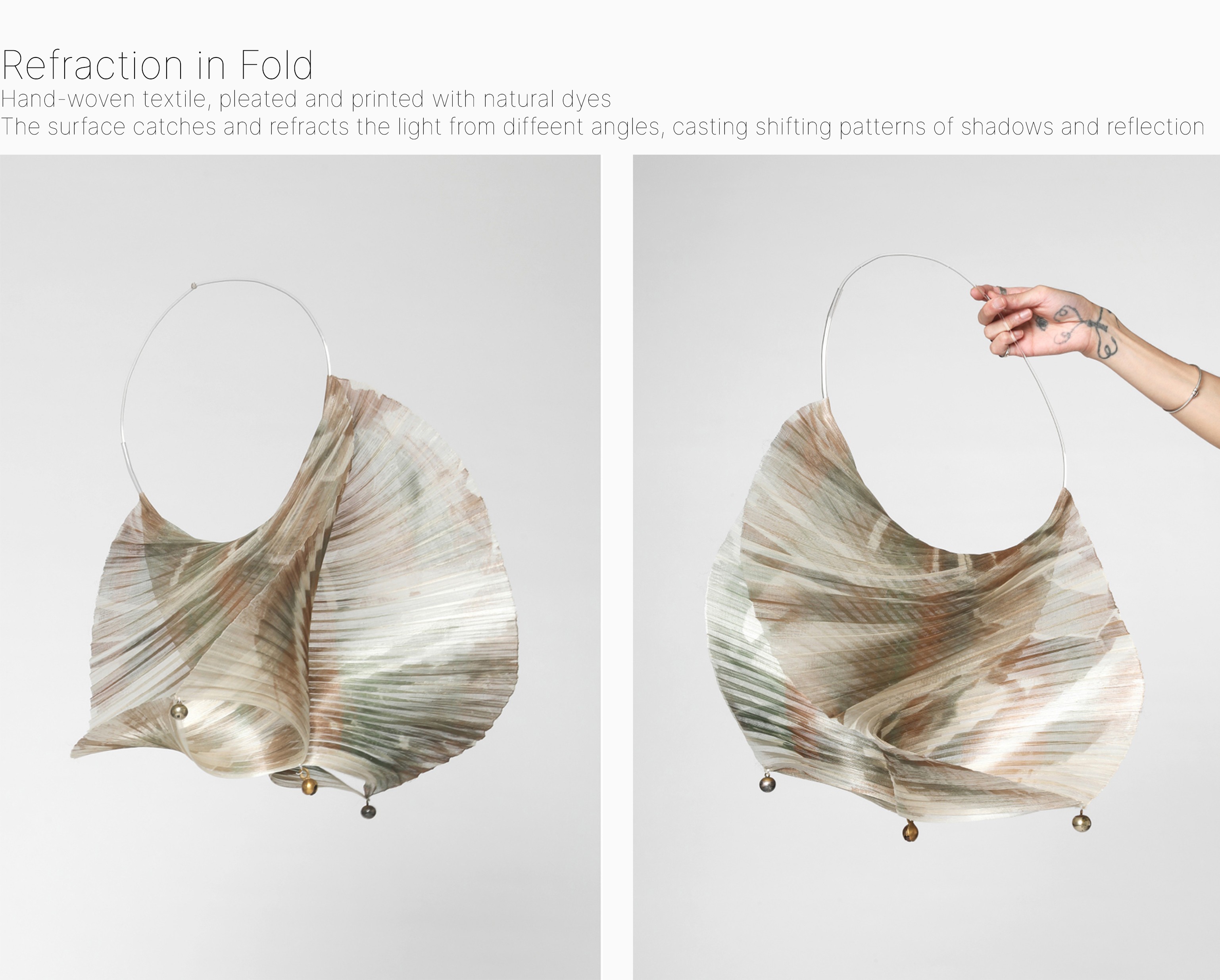
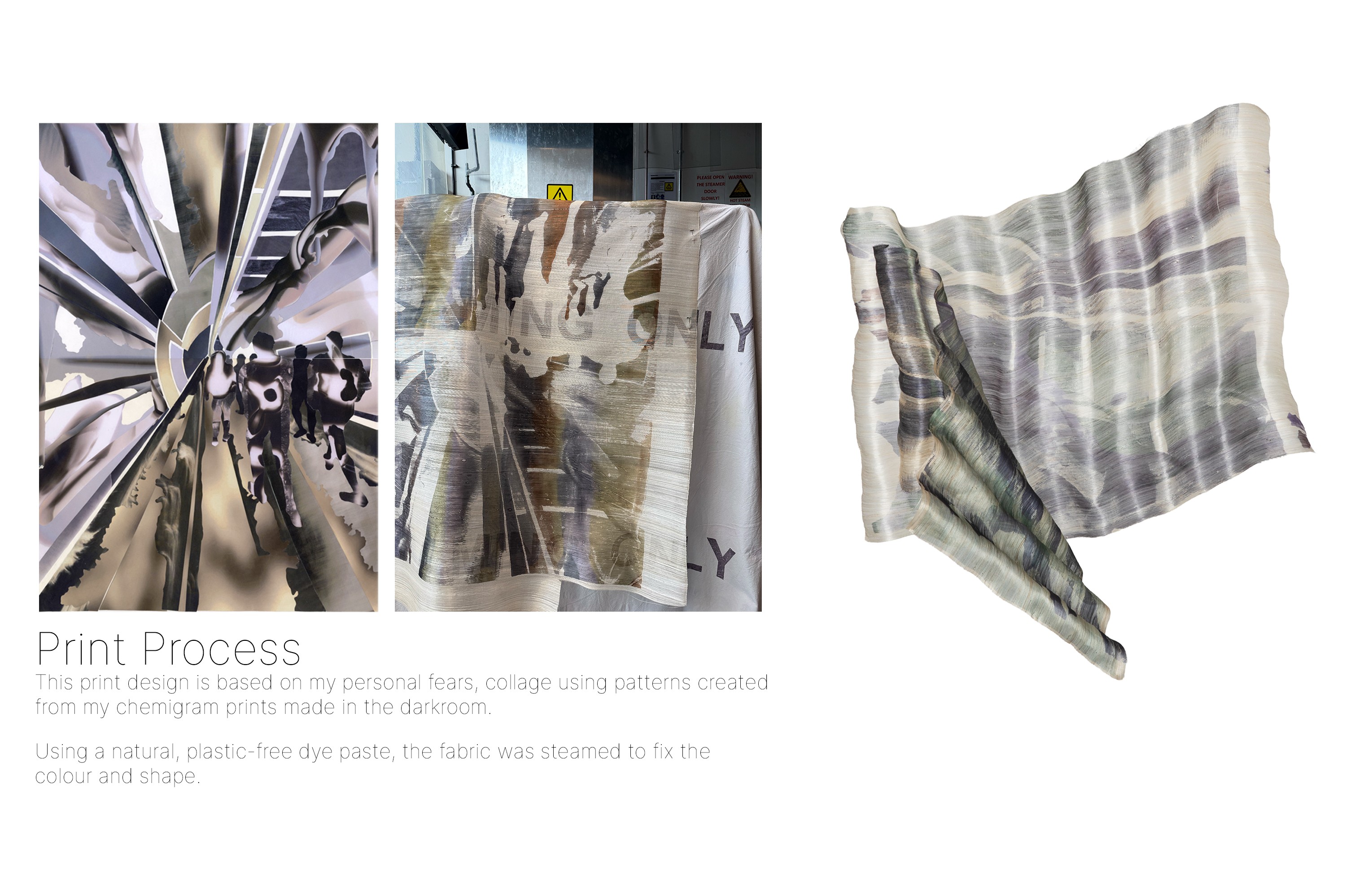
Using a self-formulated natural print paste, the textile was hand screen-printed and then steam-set and pleated. The process stabilised fibre spacing and produced three-dimensional forms that altered light transmission.
The textile was used to study its interaction with light. When suspended or folded, the surface diffuses and redirects illumination, creating soft shifts of brightness and shadow. The material suggests use as lighting elements or interior layers, where textile and light are experienced together rather than separately.
Smooth Scroll
This will hide itself!
This will hide itself!
Shadowplay - Light
Light transformed by material into spatial atmosphere.
YEAR
2025
Shadowplay considers shadow as a metaphor for internal states — emotions and uncertainties that remain present yet difficult to confront. When light enters, shadow does not disappear; it shifts, breaks apart and becomes visible. The project begins from this moment of exposure, where illumination turns something hidden into something perceived.
The Light chapter focuses on how light passes through textile material and enters a space. A translucent surface does not block light but filters it, softening contrast and dissolving clear boundaries. Instead of producing an image, the textile alters spatial perception, allowing light to occupy the room as a gradual presence.
Through this mediation, material affects atmosphere. The filtered light changes how distance and proximity are sensed, creating a subtle emotional response between body and environment. The surface becomes less an object and more a condition within the space.
About the project
The textiles are constructed from banana fibre sourced from Southeast Asia, handwoven with silk yarns. Light transmission is largely governed by the textile structure: the finer silk yarns create more open passages for light, while the coarser banana fibres provide structural support and dimensional stability. Variations in warp and weft density create areas of differing transparency and strength, allowing the textile to hold form while remaining lightweight. Responsive to moisture, heat and tension, the fibres can be gently shaped and set, allowing the surface to move from a soft cloth into a formed, spatial layer.
Using a self-formulated natural print paste, the textile was hand screen-printed and then steam-set and pleated. The process stabilised fibre spacing and produced three-dimensional forms that altered light transmission.
The textile was used to study its interaction with light. When suspended or folded, the surface diffuses and redirects illumination, creating soft shifts of brightness and shadow. The material suggests use as lighting elements or interior layers, where textile and light are experienced together rather than separately.
Smooth Scroll
This will hide itself!
This will hide itself!
Shadowplay - Light
Light transformed by material into spatial atmosphere.
YEAR
2025
Shadowplay considers shadow as a metaphor for internal states — emotions and uncertainties that remain present yet difficult to confront. When light enters, shadow does not disappear; it shifts, breaks apart and becomes visible. The project begins from this moment of exposure, where illumination turns something hidden into something perceived.
The Light chapter focuses on how light passes through textile material and enters a space. A translucent surface does not block light but filters it, softening contrast and dissolving clear boundaries. Instead of producing an image, the textile alters spatial perception, allowing light to occupy the room as a gradual presence.
Through this mediation, material affects atmosphere. The filtered light changes how distance and proximity are sensed, creating a subtle emotional response between body and environment. The surface becomes less an object and more a condition within the space.
About the project
The textiles are constructed from banana fibre sourced from Southeast Asia, handwoven with silk yarns. Light transmission is largely governed by the textile structure: the finer silk yarns create more open passages for light, while the coarser banana fibres provide structural support and dimensional stability. Variations in warp and weft density create areas of differing transparency and strength, allowing the textile to hold form while remaining lightweight. Responsive to moisture, heat and tension, the fibres can be gently shaped and set, allowing the surface to move from a soft cloth into a formed, spatial layer.
Using a self-formulated natural print paste, the textile was hand screen-printed and then steam-set and pleated. The process stabilised fibre spacing and produced three-dimensional forms that altered light transmission.
The textile was used to study its interaction with light. When suspended or folded, the surface diffuses and redirects illumination, creating soft shifts of brightness and shadow. The material suggests use as lighting elements or interior layers, where textile and light are experienced together rather than separately.
Smooth Scroll
This will hide itself!
This will hide itself!