
YEAR
2024
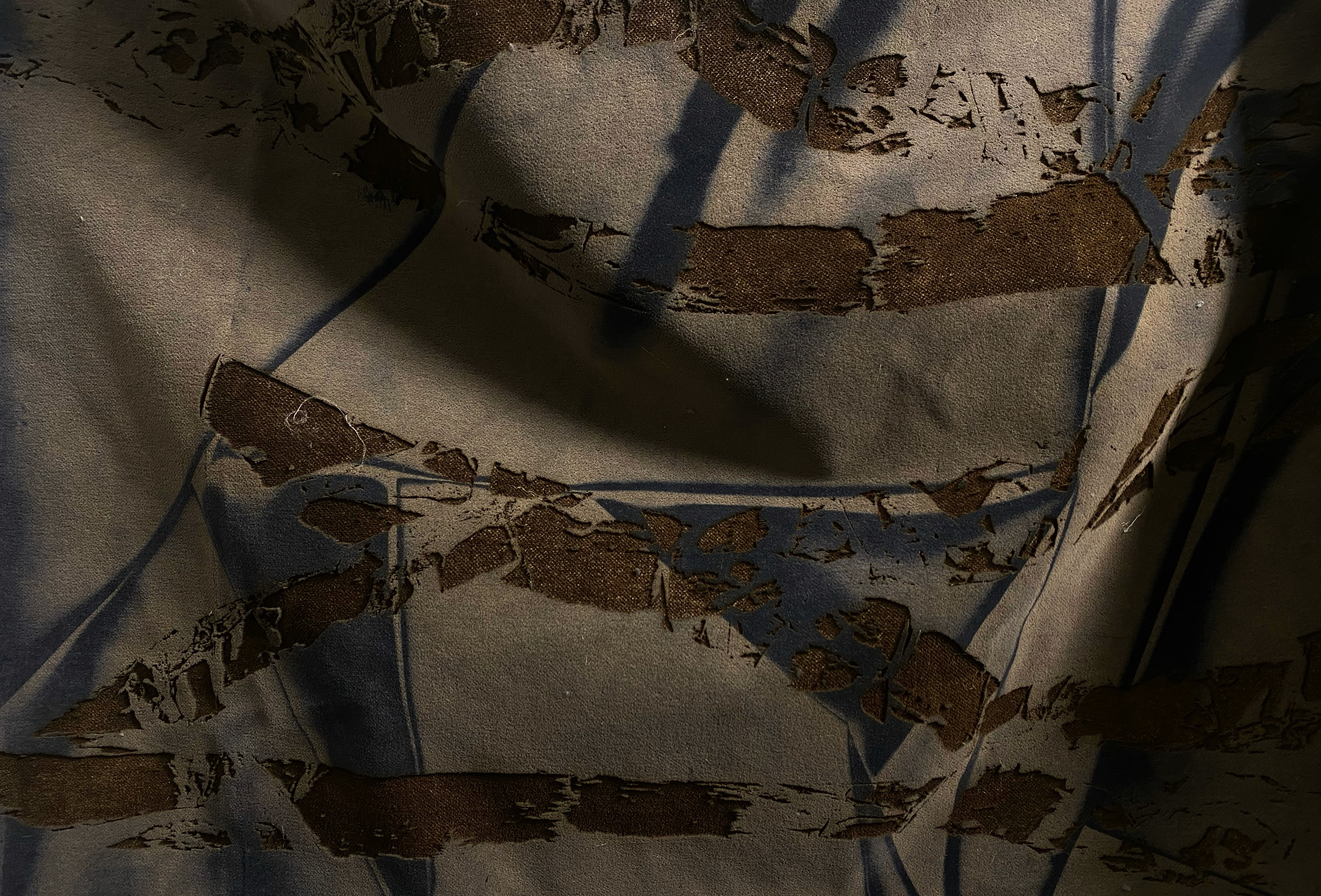
Home Package explores home as something formed by traces rather than by a fixed place. Everyday use leaves marks on surfaces — folding, pressure and repeated contact gradually record presence over time.
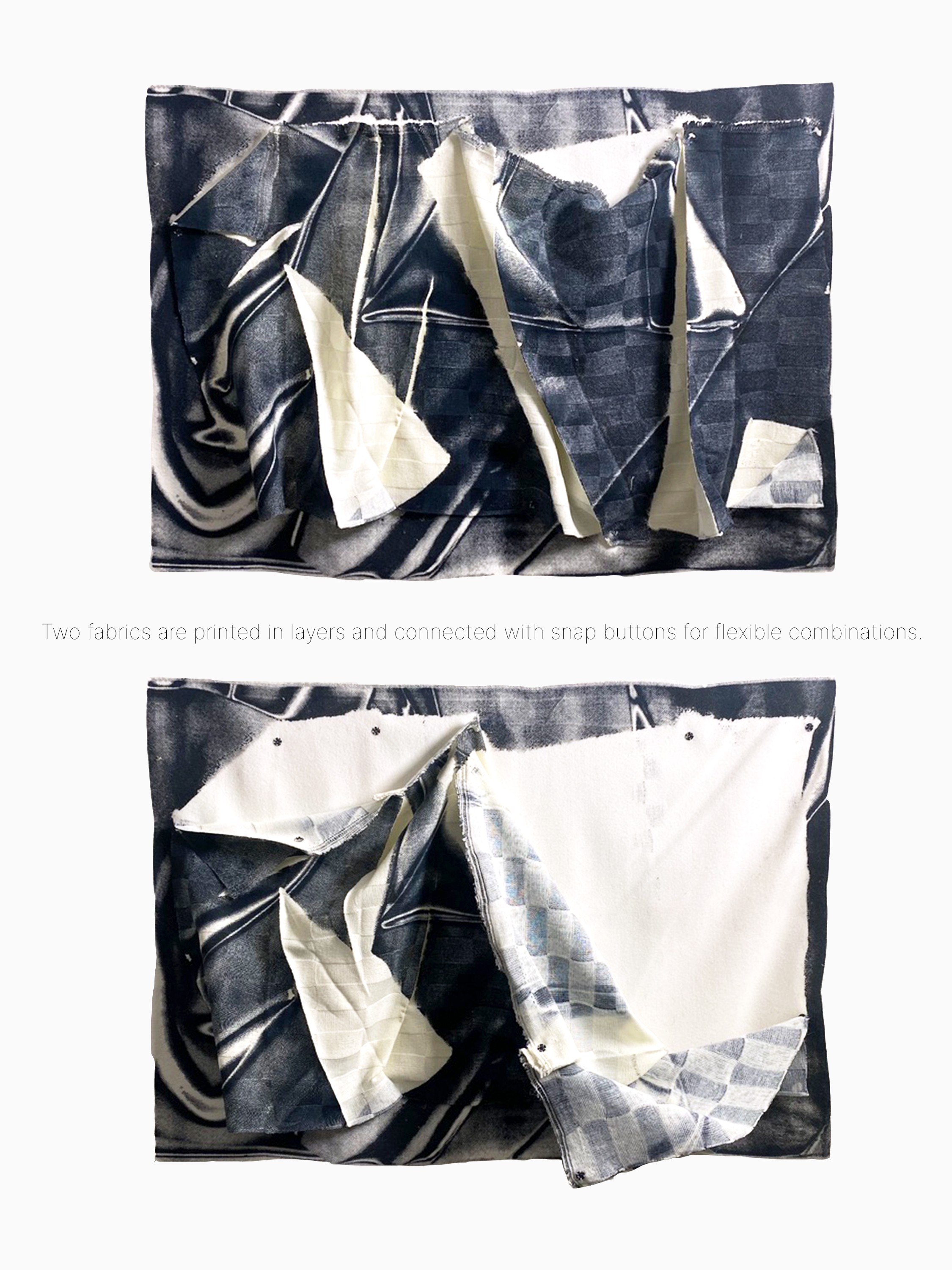
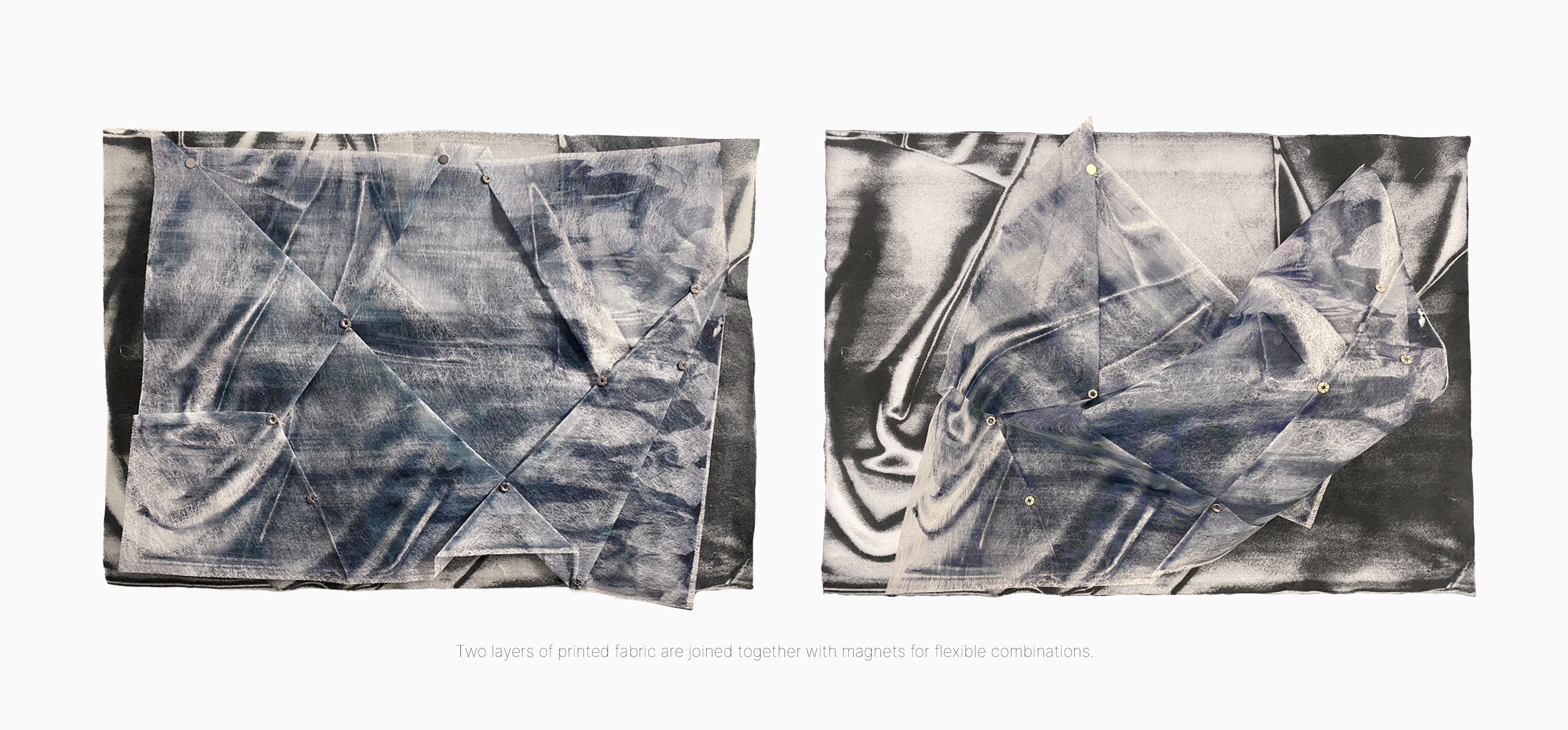
The project develops layered textile surfaces that can be attached, removed and reassembled. Instead of a permanent installation, the work treats the interior as a changing condition, where marks of living can be carried, rearranged and remembered.
About the project
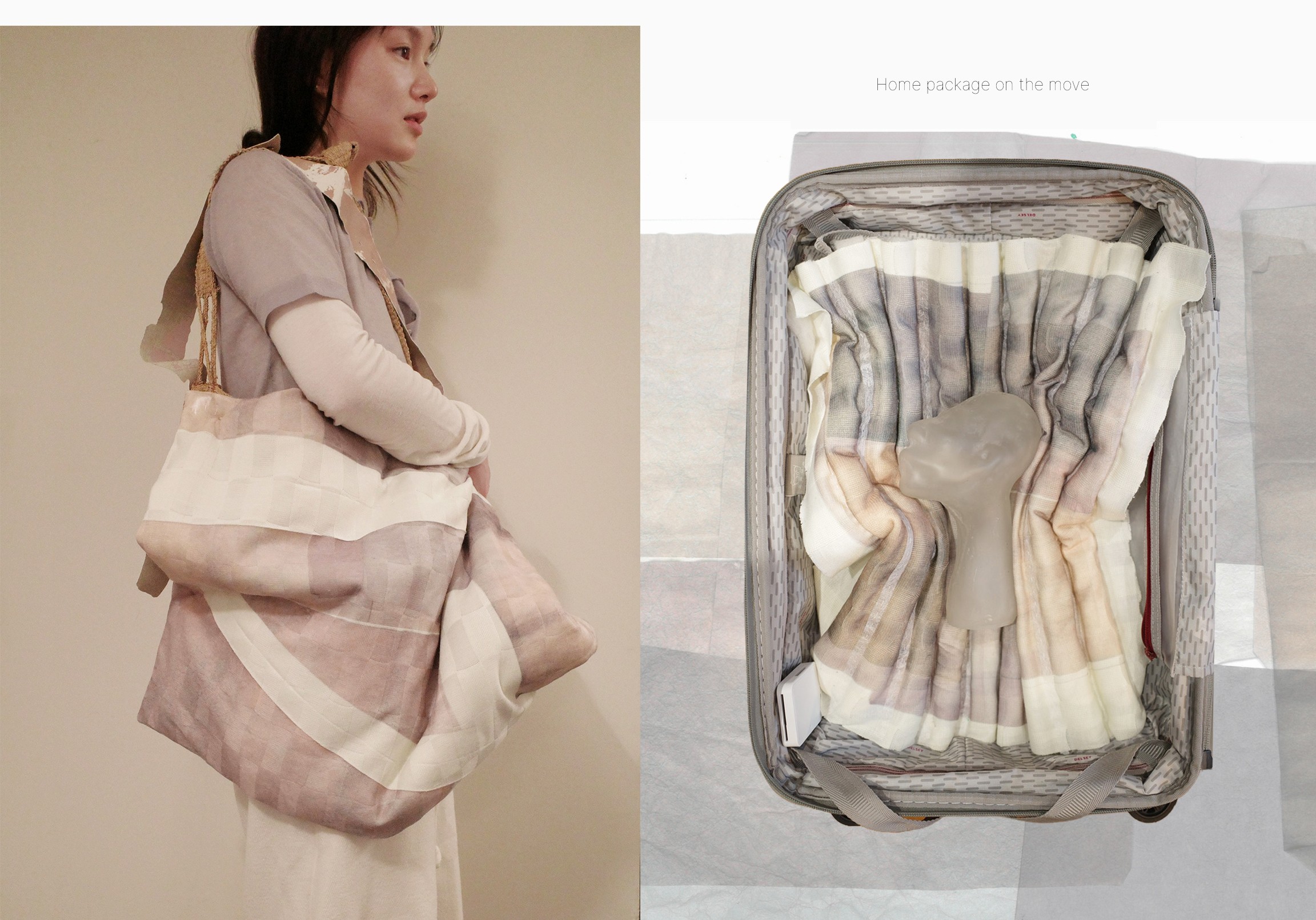
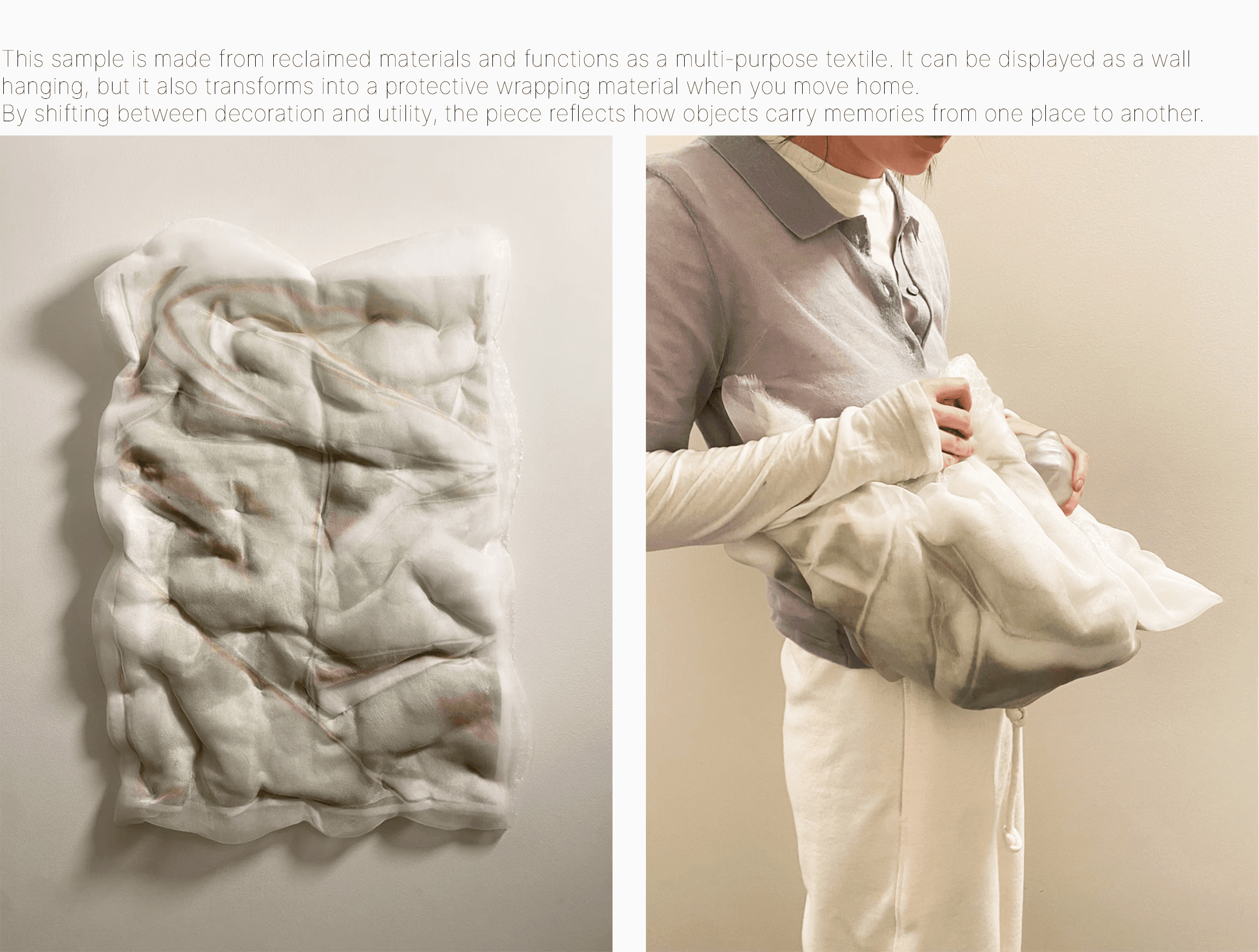
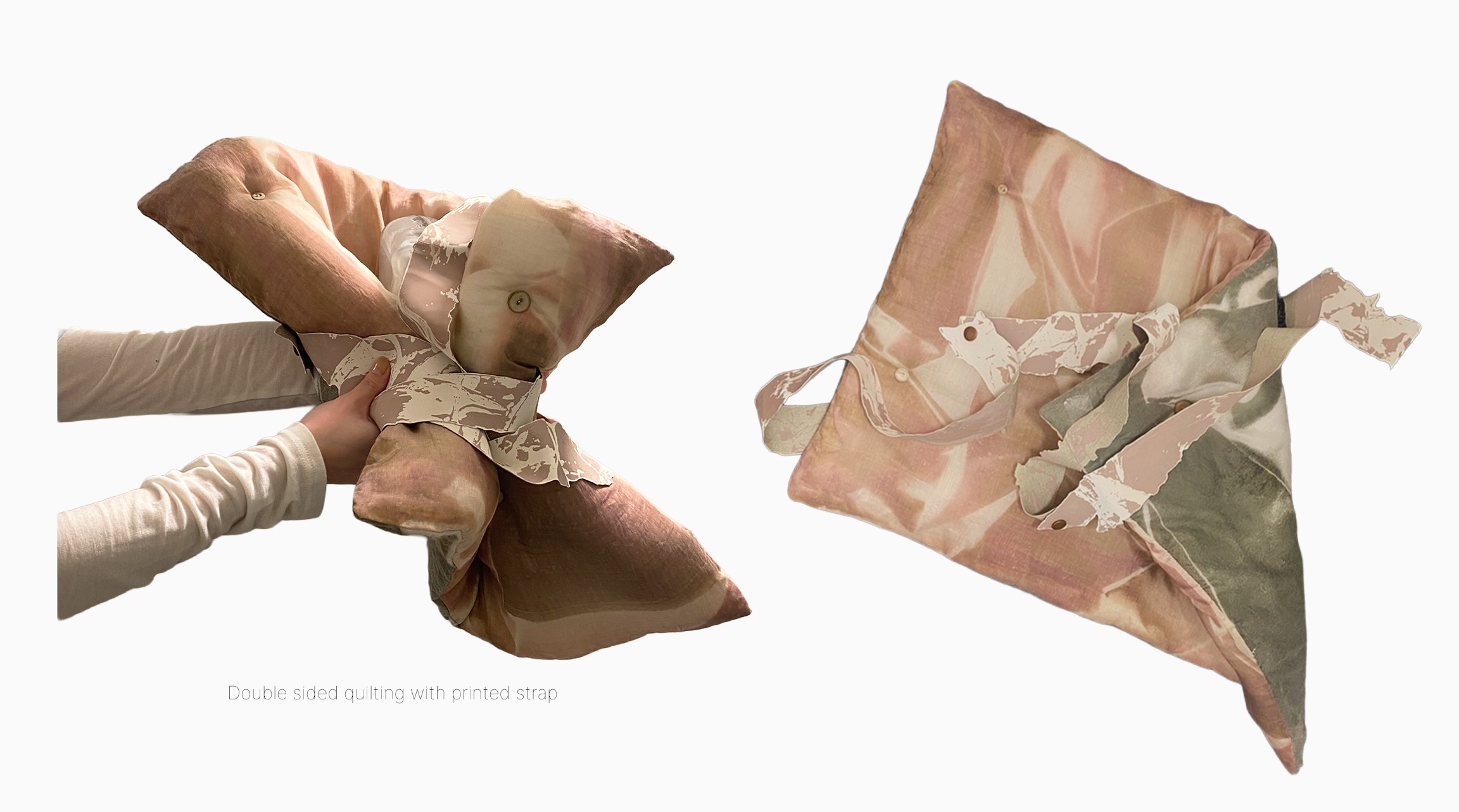
Home Package proposes a modular textile system that shifts function according to context. In everyday use, the piece operates as an interior surface — a wall hanging, soft furnishing or furniture covering. During relocation, the same object can be detached, folded and reconfigured into protective wrapping.
Rather than disposable packaging, the textile acts as a reusable packing layer, reducing the need for single-use materials such as bubble wrap. The object therefore moves between interior textile and packing tool, carrying surfaces from one place to another.
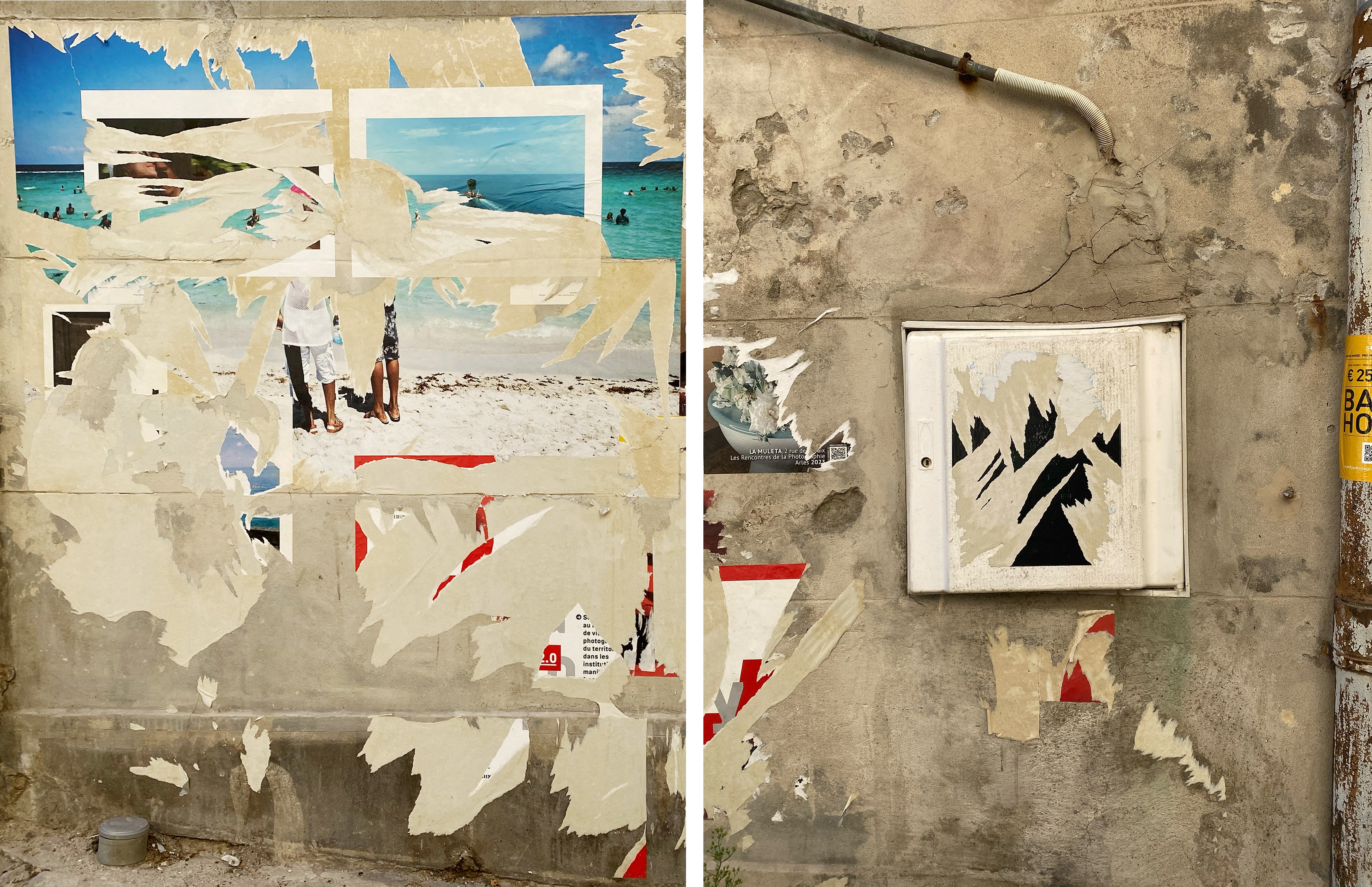
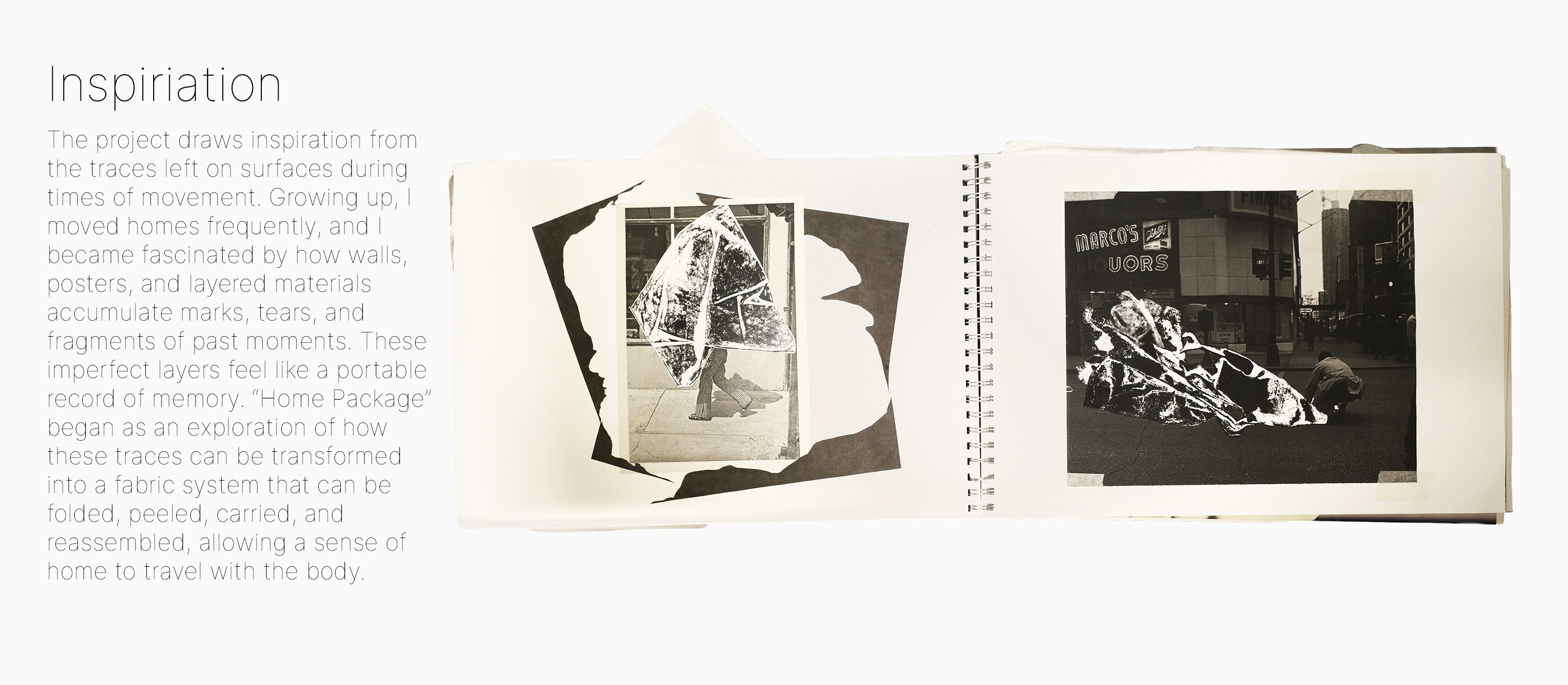
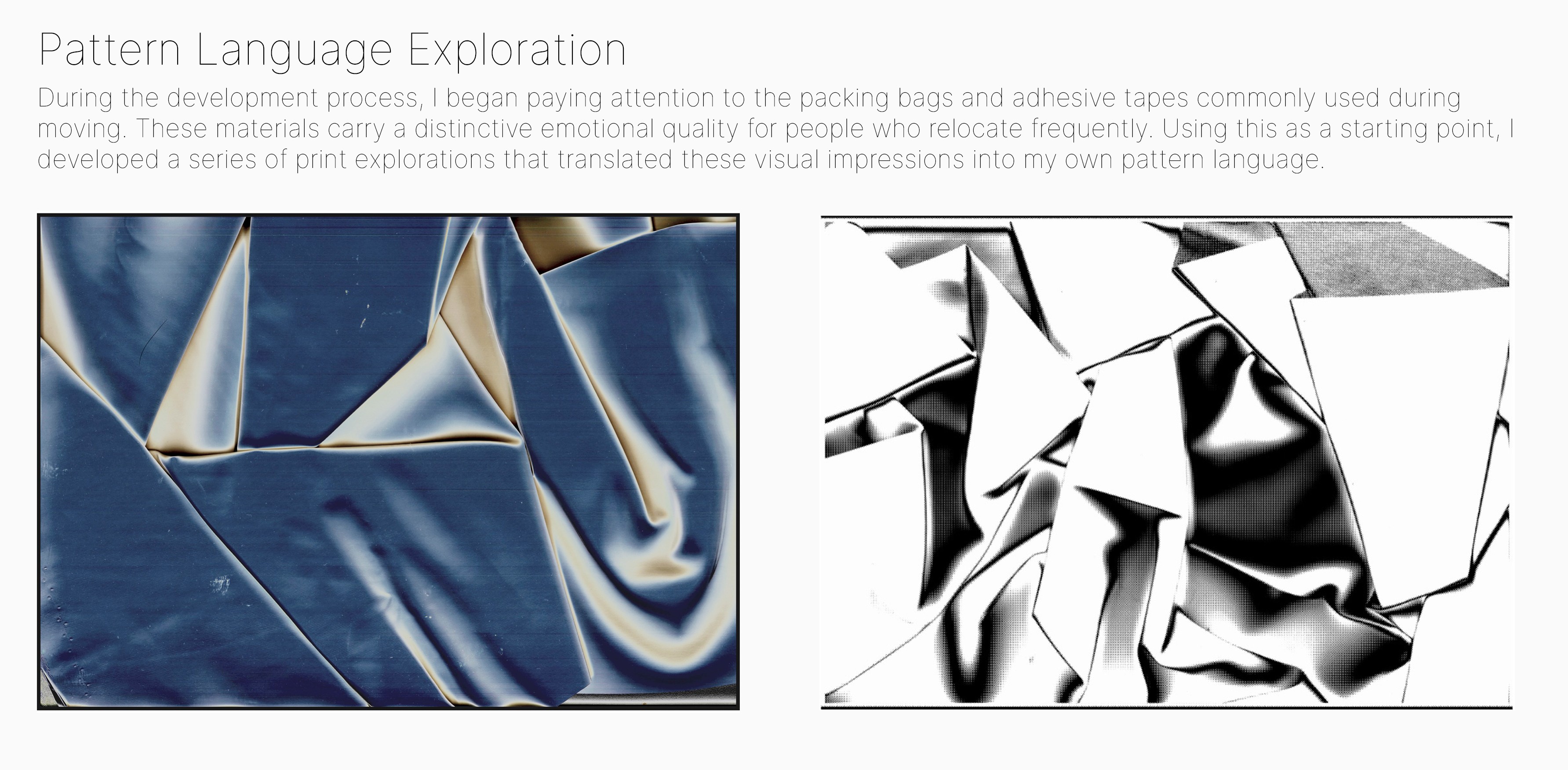
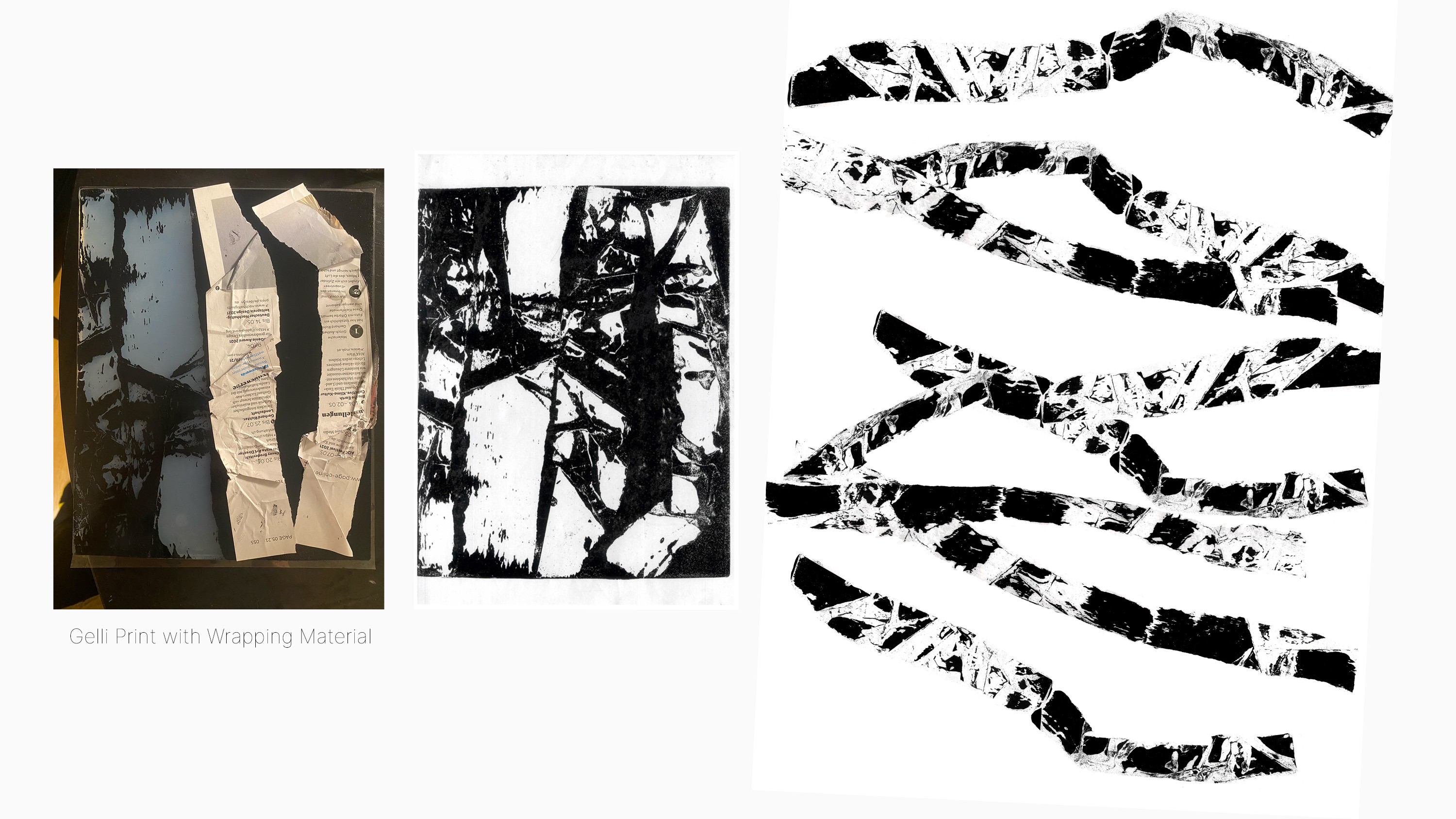
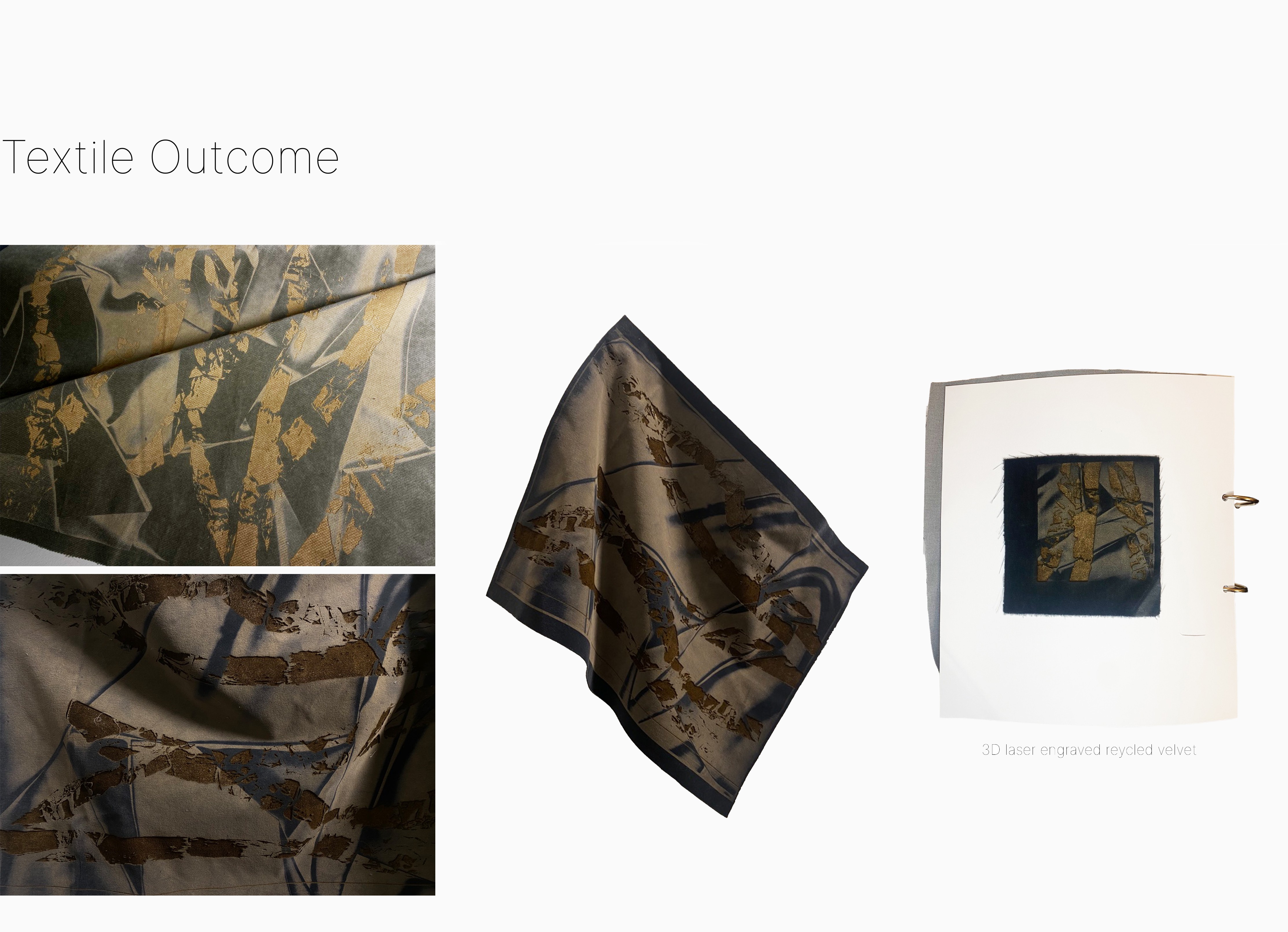
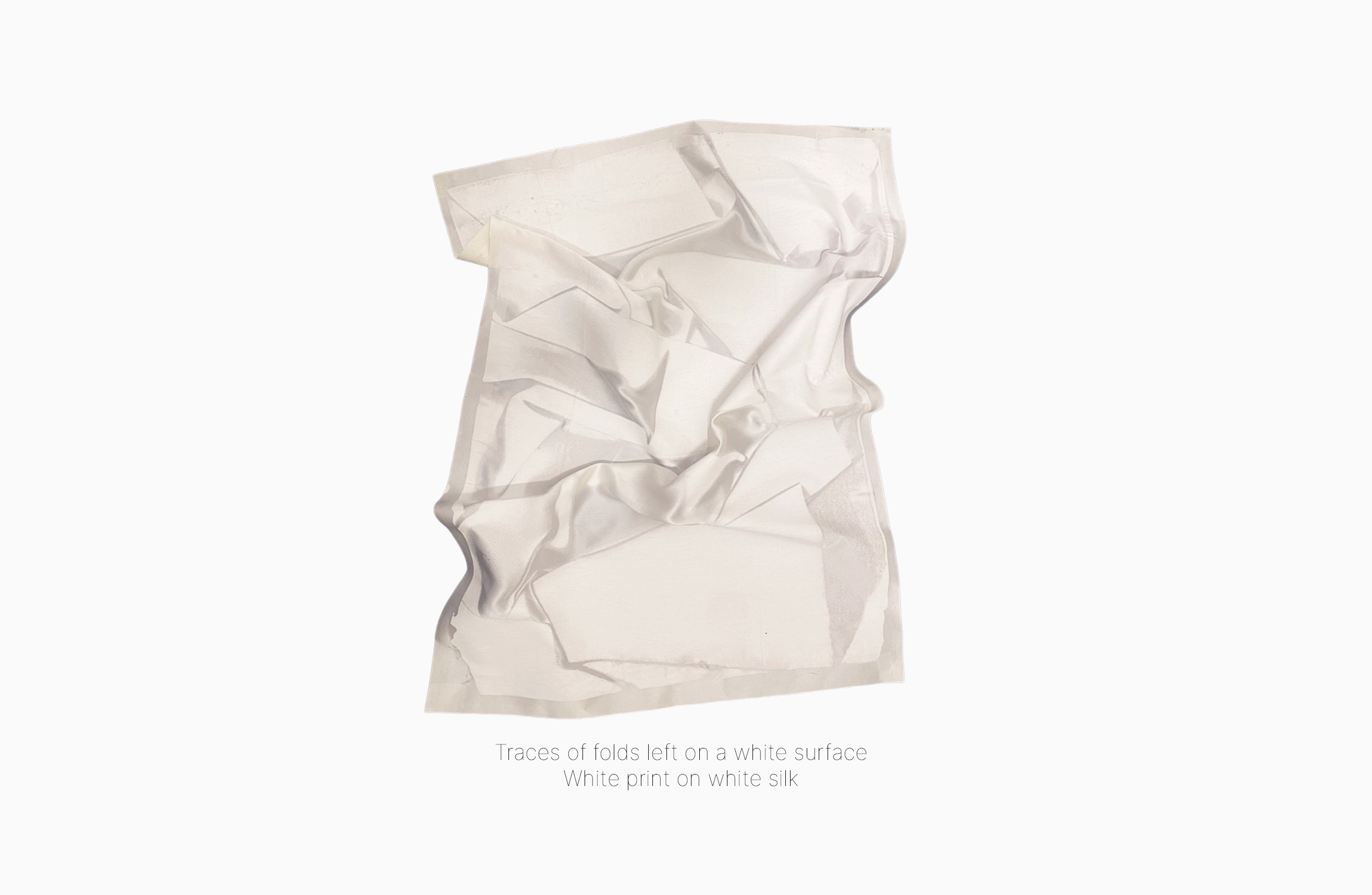
The visual language developed from earlier image and surface studies, exploring how traces appear through pressure, folding and repeated contact. References were taken from packaging materials — creases, tape lines and marks formed during moving and storage — and translated into textile structures.
Through this transformation, the project considers home as something portable, held in the traces that accompany movement rather than a fixed location.

Smooth Scroll
This will hide itself!
This will hide itself!
Home Package
Home exists through traces.
YEAR
2024
Home Package explores home as something formed by traces rather than by a fixed place. Everyday use leaves marks on surfaces — folding, pressure and repeated contact gradually record presence over time.
The project develops layered textile surfaces that can be attached, removed and reassembled. Instead of a permanent installation, the work treats the interior as a changing condition, where marks of living can be carried, rearranged and remembered.
About the project
Home Package proposes a modular textile system that shifts function according to context. In everyday use, the piece operates as an interior surface — a wall hanging, soft furnishing or furniture covering. During relocation, the same object can be detached, folded and reconfigured into protective wrapping.
Rather than disposable packaging, the textile acts as a reusable packing layer, reducing the need for single-use materials such as bubble wrap. The object therefore moves between interior textile and packing tool, carrying surfaces from one place to another.
The visual language developed from earlier image and surface studies, exploring how traces appear through pressure, folding and repeated contact. References were taken from packaging materials — creases, tape lines and marks formed during moving and storage — and translated into textile structures.
Through this transformation, the project considers home as something portable, held in the traces that accompany movement rather than a fixed location.
Smooth Scroll
This will hide itself!
This will hide itself!
Home Package
Home exists through traces.
YEAR
2024
Home Package explores home as something formed by traces rather than by a fixed place. Everyday use leaves marks on surfaces — folding, pressure and repeated contact gradually record presence over time.
The project develops layered textile surfaces that can be attached, removed and reassembled. Instead of a permanent installation, the work treats the interior as a changing condition, where marks of living can be carried, rearranged and remembered.
About the project
Home Package proposes a modular textile system that shifts function according to context. In everyday use, the piece operates as an interior surface — a wall hanging, soft furnishing or furniture covering. During relocation, the same object can be detached, folded and reconfigured into protective wrapping.
Rather than disposable packaging, the textile acts as a reusable packing layer, reducing the need for single-use materials such as bubble wrap. The object therefore moves between interior textile and packing tool, carrying surfaces from one place to another.
The visual language developed from earlier image and surface studies, exploring how traces appear through pressure, folding and repeated contact. References were taken from packaging materials — creases, tape lines and marks formed during moving and storage — and translated into textile structures.
Through this transformation, the project considers home as something portable, held in the traces that accompany movement rather than a fixed location.
Smooth Scroll
This will hide itself!
This will hide itself!